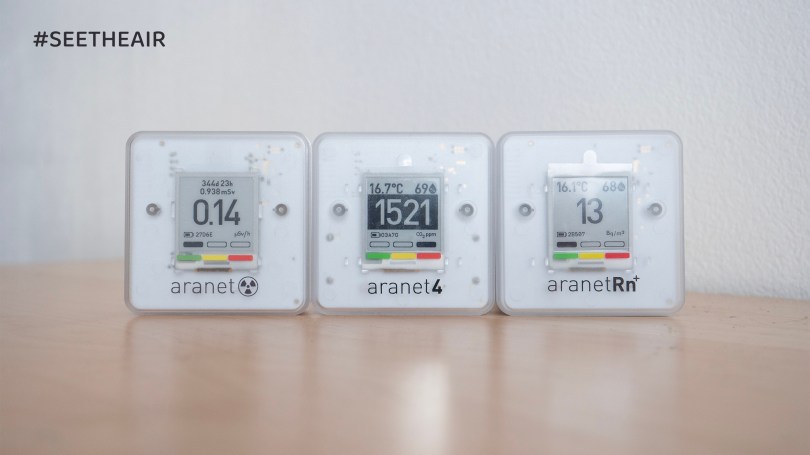
aranet: Comprehensive Environmental Monitoring for a Healthier Home

In an era where indoor air quality and environmental safety are of a high importance, aranet has emerged as one of the leaders in providing reliable and intuitive monitoring solutions. See The Air has thoroughly reviewed several of aranet’s innovative products, each designed to empower individuals with crucial insights into their living spaces. From carbon dioxide levels to radon gas and even radiation, aranet offers peace of mind through precise and accessible data.

Most aranet monitors stand out by providing a holistic view of your environment, often including temperature, relative humidity, and atmospheric pressure alongside their primary measurements. This multi-parameter approach helps users understand the interplay of various factors affecting their indoor comfort and health.

Read More »

From Rest to Rigor: How Our Air Needs Change with Activity

How much air do we breathe in a day?

We breathe without even thinking about it, but have you ever stopped to consider just how much air we actually inhale and exhale each day? The amount might surprise you. And what’s even more astonishing is the difference in air consumption between someone at rest and an athlete engaged in strenuous exercise.

At-Rest Breath

According to a paper 1, at rest, a typical adult male breathes in about 0.5 liters of air per breath and breathes 12 times per minute. This translates to roughly 6 liters of air per minute. This is because our body’s oxygen needs are lower when we are resting, so we take shallower breaths at a slower rate.

Read More »

Why Millions in India Breathe Toxic Air

Air pollution is a major health crisis in India. Millions of people in the country are exposed to unhealthy levels of air pollution every day. This is a serious problem that can lead to a variety of health problems, including respiratory diseases, heart disease, and even cancer.   

There are a number of reasons why air pollution is so bad in India. One reason is the large number of vehicles on the roads. India has a rapidly growing economy, and this has led to a surge in the number of cars, trucks, and motorcycles on the roads. These vehicles emit a lot of pollutants into the air.   

Another reason for air pollution in India is industrial activity. India is a major industrial power, and factories and other industrial facilities emit a lot of pollutants into the air.   

Finally, agricultural burning is also a major source of air pollution in India. Farmers often burn crop stubble after harvest, and this can create a thick haze of smoke that can linger for days.   

The Health Effects of Air Pollution

Air pollution can have a serious impact on human health. Short-term exposure to air pollution can cause respiratory problems, such as coughing, wheezing, and shortness of breath. Long-term exposure to air pollution can lead to more serious health problems, such as heart disease, stroke, lung cancer, and even death.   

Read More »

Beyond the Pleasant Smell: The Hidden Dangers of Air Fresheners in Your Home

We all like our homes to smell fresh (not possible) and inviting. But that seemingly harmless air freshener, scented candle, or electric perfume dispenser might be doing more harm than good. In fact they do and you will understand in detail below. These common household items can release a surprising number of chemicals that negatively impact indoor air quality and potentially our health.

The Culprit: Volatile Organic Compounds (VOCs)

All air fresheners, regardless of form (spray, plug-in, candle), rely on volatile organic compounds (VOCs) to create their signature scents. VOCs are chemicals that easily become gases at room temperature. While some VOCs occur naturally, those found in air fresheners are often synthetic and can irritate the eyes, nose, and throat.

Read More »

Cars vs People in the USA – Air Quality

Last week was CleanAirDay. I love days like this when a collective effort is made to raise awareness of such an important problem in modern society. Most importantly the new generation of citizens is taught about the importance of excellent air quality and the dangers of air pollution.

For the past few weeks, I have been living in the US near Boston and I am still trying to wrap my head around those super monstrous vehicles people use to commute from one place to another and how towns are designed to force people to drive everywhere.

I am the only person that walks to work or to the grocery store. Literally, I don’t see other people walking here. It’s tremendous!

Read More »

Review: AIRINUM URABN AIR MASK 2.0

Last year, I reviewed the AIRINUM Lite Air Mask and I was really pleased with the comfortability and efficiency during my daily commutes. The same company has developed a higher-end model called URABN AIR MASK 2.0. In my opinion, this mask has been given much more attention to the details. From the packaging to the mask itself.

The AIRINUM URABN AIR MASK 2.0 offers great protection from particulate matter. I have been wearing the Onyx Black for four weeks already.

Filtration

It employs the same technology as the Lite Air Mask with a multi-layer filter which is tested at the Research Institutes of Sweden (RISE) with results showing 98% filtering efficiency against particles down to 0.3μm in size. The size of the filter is bigger though. You will find the full lab results here. The five-layer filter can last up to a month of usage, but as always keep it away from very humid environments and procure to disinfect the inner filter layer with sprayed alcohol to prevent bacteria growth. The mask is washable and treated with Polygiene®.

Read More »

3+1 Habits for Healthy Lungs

Our lungs are the first main organs to interact with the breathing air but remember almost all our organs will eventually receive something from the air we inhaled — ideally Oxygen. OK, let’s take a step back to remind ourselves of the composition of the air in our atmosphere. The composition of the atmospheric air is 78% Nitrogen, 21% Oxygen, 0.9% Argon, 0.04% Carbon Dioxide, and other trace gases and aerosols that in most cases are the pollutants that will deplete our health. You see, our modern lifestyle and the constant burning of fossil fuels (of any form including wood burning) has changed the balance and composition of the air in neighborhoods and cities. As a result, we end up with abnormal concentrations of pollutants like particulate matter, nitrogen dioxide, carbon monoxide, etc in the breathing air.

From an evolutionary perspective, our bodies are not designed to deal with the fine particles or the notorious toxic gases that are released into the atmosphere from our wrong investment in fossil fuels. With the exception of our gastrointestinal system which can discard unnecessary solids or liquid, our lungs cannot get rid of the air pollutants so they stuck and accumulate inside us. Some may be filtered by the liver.

Our noses or even our upper respiratory tracks can trap some coarse particulate matter, but there isn’t any mechanism to trap fine-PM or nanoparticles or gases, as a result, they end up reaching our lungs and the alveolar sacs where the exchange between oxygen and carbon dioxide occurs. The pollutants can pass that barrier or even they are stuck there resulting in inflammation responses and trust me we don’t want inflammation anywhere. I don’t want to dive too deep regarding what’s going on inside us when air pollution reaches our organs because it gets ugly.

What can we do to keep our lungs and the rest of our organs healthy and happy?

Avoid Ambient Air Pollution & Fix Your Indoor Air Quality

The first and obvious thing to do is to avoid air pollution. Some apps can help you find the best route in case you commute. However, sometimes it is hard to bypass polluted and busy roads. For this reason, we need to prevent pollution from being released into the atmosphere in the first place. How? By educating the rest. I know it is a hard task but it doesn’t have to be a chore. Just convince one close person and teach him or her how to do the same with another person close to them. If we have learned something from COVID-19 is how fast something can spread.

Indoor air quality is something we have to pay closer attention to. Sometimes we dismiss the fact that we spend a lot of time indoors and outdoor pollution slips inside or we create indoor air pollution. We had better demand better indoor quality in our workplaces as we spend a lot of time there too. Quantify the pollution with an indoor air quality monitor as it is the easiest way to take control of your air. Remember, no one is looking after your indoor air quality, except you!

Work Out

I love exercising, well no! Hear me out, I love the feeling of achievement each time I complete a physical workout because I know it benefits me on so many levels, including my lungs.

Full disclosure, I only exercise and recommend it to people when air quality is excellent and this is a condition that I have to follow 100% because when we exercise the demand for air increases, and our respiratory rates jump from about 15 times a minute to about 50 times a minute.

When we exercise we increase the capacity of air our lungs can hold and we increase the blood flow to our lungs, allowing the lungs to deliver more oxygen into the blood. Exercise reduces our blood pressure and improves our overall cardiac function so that our heart can pump more blood with each heartbeat. That means that our heart beats less time per minute, as a result, we extend its life span.

Don’t run next to busy streets! Indoors, make sure the air quality is excellent too.

Eat Healthy Food & Drink Healthy Beverages

We are what we eat, drink and breathe, so invest in healthy and vibrant food like seasonal fruit and veggies. Meat is also important but during a whole week dedicate one or two days to meatless meals. There are plenty of delicious, inexpensive, and climate-friendly recipes. I could recommend some so feel free to ask me. I don’t believe in strict diets but in well-balanced diets.

Unfortunately, the food and beverage industry is adding sugar and salt to make food and drinks more interesting for many decades, as a result, we are unable to distinguish the real flavor of a meal. My approach is to search for the taste of the plain food or drink. I can taste water, can you? Drink a cup of organic coffee or tea without sugar and try to find the notes of the different elements.

Our lungs need food and drinks rich in nutrients and antioxidants like vitamins, minerals, healthy fat, fiber, protein, and complex carbohydrates. These nutrients will reverse some of the damages and inflammation air pollution will cause to our lungs during our walk in the city center where traffic is awful. Did you know that the lungs are responsible for the transpiration of the “burned” calories out of our bodies in the form of carbon dioxide?

Meditate

Meditate once a day if you can, but don’t burn stuff! I have seen people burning incense or dry plants (sage) when they meditate in their effort to create a pleasant indoor environment but these practices release a lot of particulate matter and VOCs which end up inside them.

Meditation and some breathing techniques are designed to strengthen the lungs and the muscles around them. People who suffer from asthma, chronic obstructive pulmonary disease (COPD), and other lung diseases may benefit from practicing them, according to some scientific studies but make sure to ask your doctor.


Breathe Helmet – Angel Investor

Introduction

I have teamed up with a great product designer Nathan Hassanali in our effort to offer clean air to the commuters that need to move around the cities where combustion engine vehicles are unfortunately still a priority over sustainable alternative methods.

The Problem – Air Pollution

One of the biggest challenges of the 21st century will be to mitigate the negative effects of transport – greenhouse gases, air pollution, and noise – while ensuring positive aspects of mobility. Meanwhile what can dwellers do to protect themselves from the toxic air that is present in the streets all around the world?

Although air pollution has decreased over the last two decades, it is still a major problem in many areas. ‘EURO standards’ for vehicles have not succeeded in reducing Nitrogen Dioxide (NO2) emissions and “defected” vehicles (aka Dieslegate) still circulate without meeting the levels set out in the legislation. Recently, the World Health Organization updated the Air Quality Guidelines (2021 AQGs) which sets the bar for human health high because according to new methods for evidence synthesis and guideline development they found proof of health effects occurring at lower levels than previously understood.

Read More »

Op-ed: Wood-Burning Season is ON and the Zombies return!

Although some people claim that the wood-burning season doesn’t exist anymore because people never stop burning stuff (and this is true in some regions), the vast majority of the population can’t wait for cold weather to arrive in order to light the “cozy” wood stoves and unconsciously chock the village with toxic smoke.

Yes, wood-stoves even the ECO friendly or low-emissions or EPA certified or you name it, are huge polluters! They emit lots of particulate matter (commonly known as PM2.5) and a huge array of toxic chemicals that sometimes linger in the air for many days. Air pollution kills 13 people every minute worldwide and scientists at Harvard University found that dwellers who live in polluted areas are 15% more likely to die from COVID-19 than those who do not!

The atmospheric conditions and the geographical location of a village or city work in a complex way sometimes in favor of the dwellers but most of the time against the dwellers. When a city is surrounded by hills and mountains air pollution tends to stay there for a long time, like in Murcia, Spain. In that case, people’s lungs work as purifiers and trap all the pollutants, as a result, we have more hospital admissions and more chances to suffer severe health effects due to the air pollution which is deposed inside our bodies. The cost to maintain public health also increases.

By comparison, wood smoke from stoves and boilers carries the highest concentration across all pollutants. One eco-certified wood stove is rated at 3.1grams/h of particulate matter which is equal to six heavy-duty lorries which are rated at 0.5grams/h of particulate matter each.

Read More »

Review: CO2BUDDY by Analox

Carbon dioxide (CO2) monitor sales have skyrocketed during the pandemic because they are good indicators of the indoor conditions in public places like schools, offices, restaurants, etc. The CO2BUDDY can be used in all these cases. However, it can cover even more scenarios as it functions as a tool for professionals that work in places where the conditions are extreme, for example, in dry ice shipping & logistics and COVID-19 vaccine distribution channels.

Dry ice is a solid form of CO2. As it warms, it goes through a process called sublimation, meaning it goes directly from a solid to a gas, bypassing the liquid state. As a result, huge concentrations of CO2 are released into the atmosphere and the environment. These concentrations can reach critical levels for the health of the employees.

I want my review to be as accurate as possible and despite the fact that I don’t work in harsh environments, I know people that they do, so I asked them to wear the CO2BUDDY during their workdays and share their experience with me. They were more than happy to help and they also took some photos. Before reading their experience let’s learn some technical details about the monitor.

Read More »