Review: XT Mini by Ethera Labs

Managing air quality monitors (AQM) in buildings is not always an easy task especially if you have deployed a lot of them. When there are many rooms that you have to take into consideration it can become very costly, very fast to equip all those rooms. Is there a way to monitor rooms without an AQM?

Well, it turns out there is a way to monitor the environmental and air quality conditions in rooms that do not have physical monitors nowadays. How?

Ethera Labs, which is a French company, with over 10 years of experience in professional IAQ solutions has integrated powerful Machine Learning (ML) algorithms that predict the conditions in rooms where air quality monitors are not installed, yes that’s right, you have read correctly. They have trained special neural networks by taking a lot of parameters into consideration in order to predict accurately the conditions and alerts users in case they need to take actions or even address an AQ/Environmental incident automatically.

By connecting the station to BMS, they manage to achieve energy efficiency while directly managing the ventilation system, as well as portable air purifiers or giving building operator the right information in advance so they can take action at the right time. They achieve two goals, great air quality and energy efficiency.

Hardware-wise Ethera Labs offers an arrange of monitors that can address different building specifications and needs. In this article, I will review the Mini XT Basic (MX-KIT020) and the NEMo Cloud/Supervision Cloud platforms.

Read More »

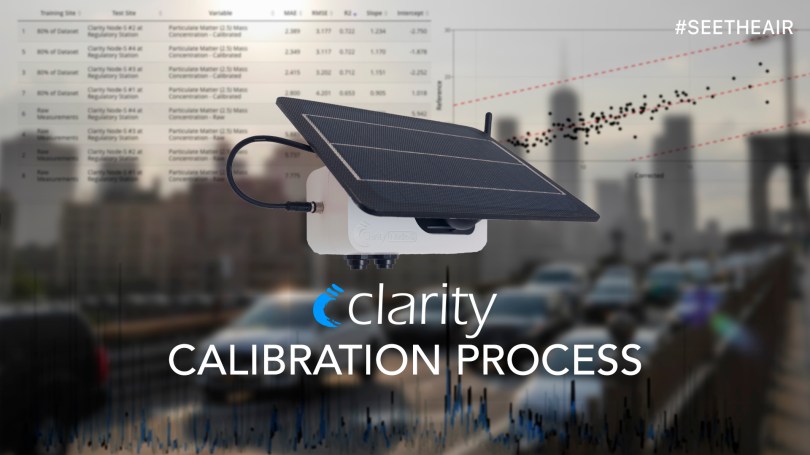
Clarity Node-S Remote Calibration Process

When you use low-cost monitors for professional reasons, you need to calibrate them in order to obtain the best possible measurements. This process makes data less vulnerable to environmental conditions and more valuable to scientists and policymakers.

Clarity takes this process really seriously, and they dedicate a lot of resources to making sure their devices will measure accurate data (for more on how to assess air quality sensor accuracy, see this blog). I ask Clarity to perform a remote calibration on my Node-S and guide me through the entire the process.

I have discovered something interesting during that process about the local air quality station.

As you may already know from my previous articles, my local air quality station ES1393A is placed inside a park and it is almost surrounded by trees. Trees act as a barrier, and they block pollutants from reaching the monitors. The Clarity team told me that this was an especially complicated calibration. I suspect it has to do with the location of the station and how trees may interact with low-cost sensors.

The type of trees in my city is a variation of a ficus called ficus retusa l. var nitida. These trees release a resin from their leaves which can create interference to the low-cost sensors that do not have a filter to keep them out as the scientific-grade monitors do. Most outdoor scientific-grade monitors come with a debris screen inlet or an Inlet Heater which may capture the resin from the trees.

The problem is not the trees but the location of the air quality station that shouldn’t have been there.

Read More »

Review: Kaiterra Sensedge Mini for Business and Green Buildings

There is a demand for Green Buildings lately, which focus on the comfort and health of the building’s occupants. Energy efficiency was the original target for most of the green buildings certifications programs, but they have evolved, and they now focus on many more aspects of the indoor environments. Indoor Air Quality has become the number one priority for many green building certifications, and in order to be certified, there are strict rules for ventilation and AQ monitoring.

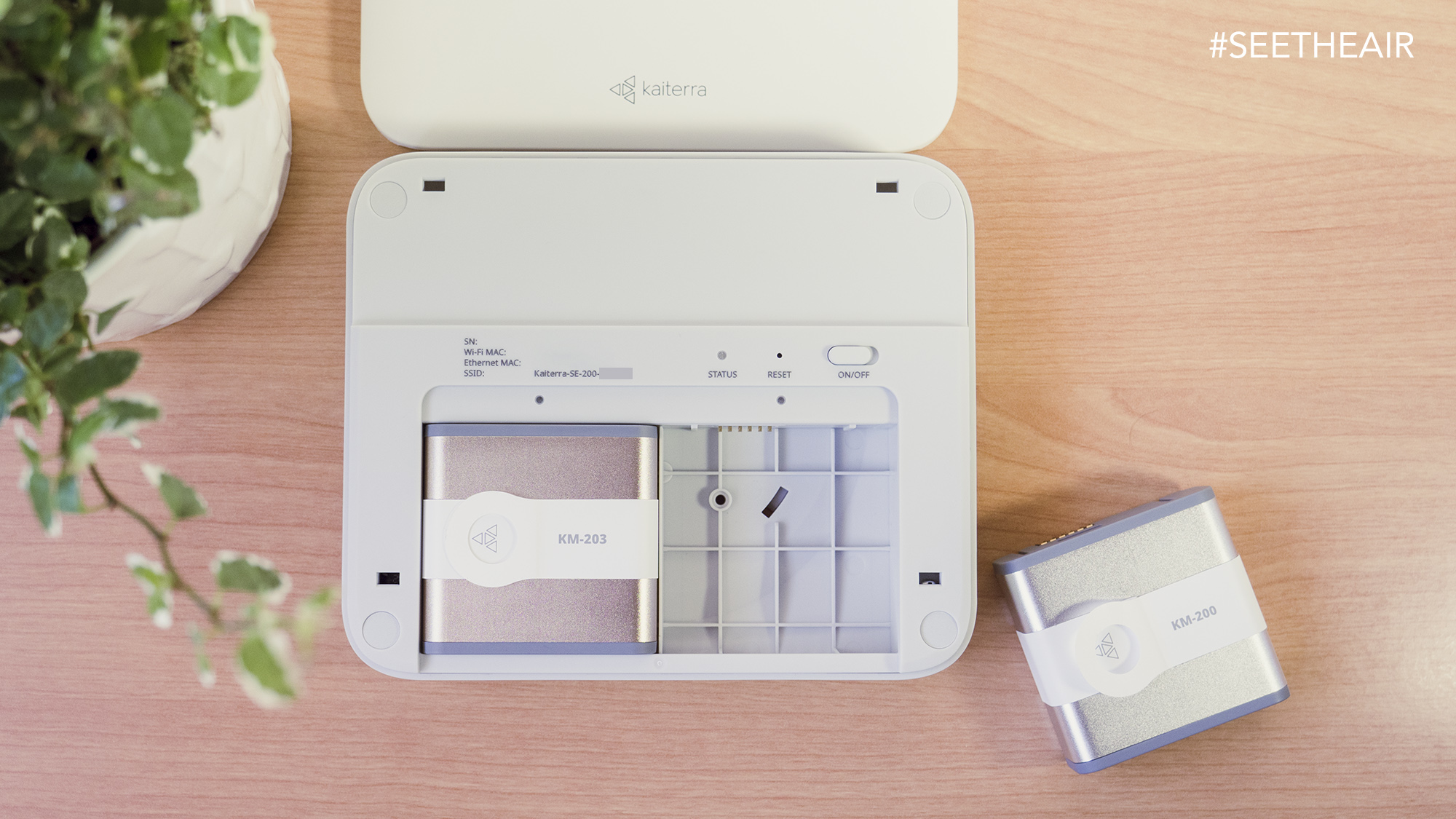
Here comes Kaiterra Sensedge Mini, which is a RESET certified indoor air quality monitor. The Sensedge Mini is a calibrated real-time monitor that has to be placed in buildings that wish to obtain a Green Buildings certification.

The Sensedge Mini uses two removable sensor modules to replace the traditional, costly calibration processes for long-term accuracy with minimal maintenance.

Read More »

In-Depth Review: Wynd Halo 1st Edition Sensors

The Wynd Halo 1st Edition uses a proprietary PM sensor with a blue-light laser instead of a red-light laser, which presumably makes it more accurate and precise. Interestingly, I remember during the Kickstarter campaign of the monitor, backers were asking the company if they will sell the sensor as a component part to third parties, and they said yes because it was about to revolutionize the industry.

Although I don’t have a reference monitor, the comparison I conducted is considered a field evaluation in a real-life situation. AQ Monitors are designed to operate inside apartments and buildings for this reason I personally value more a field evaluation in situ than a lab evaluation where every parameter is controlled.

This kind of evaluation won’t tell us how accurate is the sensor, but it will reveal the correlation against other monitors in order to determine if measure something respectable. For example, there are many field and lab evaluations for the commonly found Plantower PMS5003 sensor that demonstrate a correlation of 0.78 – 0.93 against various reference monitors.

Read More »

Series of Innovators: SPEC Sensors

Introduction

SPEC Sensors was founded in 2012 in the USA (California) by Dr. Joseph Stetter and Ed Stetter. Their gas sensors, analog and digital, are one of a kind as the technology and hard work has allowed them to minimize the sensor size to only 20x20x3 mm in order for gas sensing to become a part of our everyday lives. The company has foreseen that sensors of all types are going to be integrated into smartphones and other wearable devices, becoming an integral part of our everyday lives and building the Internet of Things (IoT).

IoT low-cost sensors are in my DNA as I believe they will allow us to understand environmental issues otherwise, we would have dismissed or we would not be aware.

Let’s read together what they have to share with us and reach a conclusion at the end.

Interview

  • Tell us a bit about your motivation in developing air quality sensors?

We saw the need and opportunity for low cost electrochemical sensors with good performance – before SPEC, high performance sensors were too expensive and too big to enable new applications in wearables and distributed monitors. SPEC was born out of the research driven by Eco Sensors / KWJ Engineering, Inc. led by Dr. Joseph Stetter.  We were able to build SPEC Sensors using modern technology in a new high performance plastic package.Read More »

What should schools do to prevent the spread of SARS-CoV-2 in classrooms

Masks provided decent protection against the SARS-CoV-2 but if a carrier of the virus (40% of them are asymptotic) stays inside a home/business for a long time then the chances of transmitting the virus are higher because some particles may escape.

According to experts the best way to prevent the spread of the virus is to keep introducing fresh air inside a room.

Unfortunately, most rooms don’t meet the recommendation of 8 air changes an hour for a 10 square meter (107 square foot) room occupied by 4 people. A clear example is a classroom that doesn’t meet the recommended ventilation rates. This is a common mistake across all schools in the world.

Read More »

Building an IoT Air Quality Monitor that will survive the competition

Building a hardware startup is a hard business, we are well aware of that. Right now, there are a lot of indoor/outdoor Air Quality Monitors in the market that support low-cost sensors, unfortunately, even when the cost of the materials (aka BOM) is low, companies struggle to survive because of an initial bad business model.

If you want to enter into the game of the air quality or in general of the IoT, you have to ask yourself: How do I turn what I do into a compelling service?

When you sell a product you earn some money, typically three times more of what you have spent. However, your income relies only on that model and the problem with technology is that it evolves constantly, so tomorrow a new company will sell a product a bit better than yours because there will be a new sensor in the market and all future clients will shift their attention towards that device. Then you have to wait for a year or more in order to realize that you have to shut down your product and taking down with you a few hundred to thousand clients that have bought your AQM — More e-waste and frustration for the end-users.

For this reason, you have to invest in software development as well, and here comes my expertise. I have seen a lot of Air Quality Monitors, and I have collaborated with a fair number of companies in the field, but I always see the same mistake.

Some companies believe that they have to give customers free data support and services for life and if they turn their product into a paid service and they ask money based on a subscription model then they will lose costumers, but this is not necessarily correct. You are not going to ask someone to subscribe to your service to get just numeric values of a pollutant, you have to offer them something more than that. Something the competitors can’t offer because this feature is unique in your ecosystem. Maybe it could be restricted with a patent too.

Consumers really value good products especially when they can’t find something similar.

You are going to ask me, “What can I offer them?” You have two options, stay tuned for future articles or contact me in order to discuss how we can collaborate.

 

Dear city of Almeria (Spain) or any other city in the world (English/Español)

(Scroll down for the Spanish version/Desplácese hacia abajo para la versión en español)

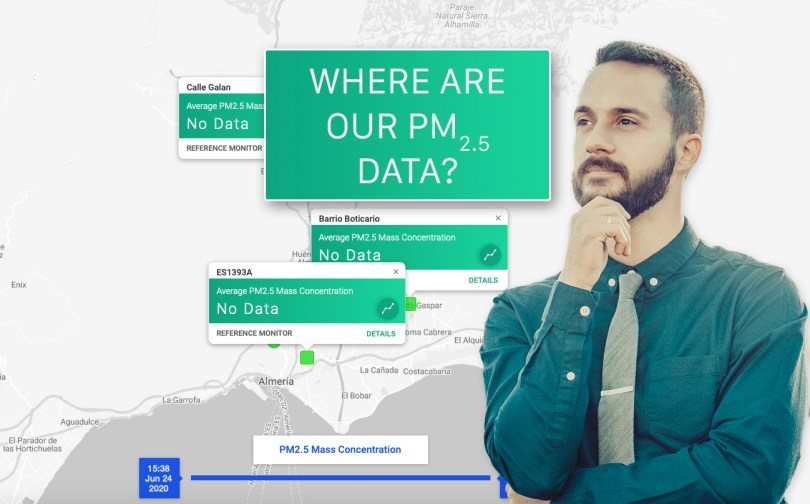
I am writing this article because I would like to help you understand the importance of the issue as the whole province and consequently my city Almeria doesn’t have an official air quality station with a sensor capable of measuring particulate matter with an aerodynamic diameter of 2.5 μm or less (PM2.5) in real-time.

What is Particulate Matter (PM)?

Particulate Matter (PM) are solids material (sometimes liquid too) that float in the air. Some PM is released directly from a specific source − combustion in Diesel engines − while others form in complicated chemical reactions in the atmosphere.

Particles in the PM2.5 size range can travel deeply into the respiratory tract, reaching the lungs. Studies also suggest that long term exposure to fine particulate matter may be associated with increased rates of chronic bronchitis, reduced lung function and increased mortality from lung cancer, and heart disease. People with breathing and heart problems, children and the elderly may be particularly sensitive to PM2.5.

The Problem

In the province and city of Almeria, there are three Air Quality Stations that measure many pollutants one of which is PM2.5. Unfortunately, these sensors are outdated and the results we get are ONE daily average value which is basically useless in my opinion. Apart from that, we need to wait for a month to get the results back after filing a form. I guess the same thing applies to the 68 stations all around Andalucia in total.

Citizens need real-time data in order to take action and reduce their exposure to air pollution. They also need better tools and maps where they can visualise where pollution is in order to avoid harmful exposure. There are already many studies supporting the correlation between air pollution and COVID-19 cases.Read More »

Review: Airthings Solutions

Airthings is a pioneer company as they have developed an in-house sensor for Radon detection but their expertise doesn’t stop there. They have expanded their product-line with domestic and business solutions with one thing in mind, how to enhance indoor life.

Since the beginning of the pandemic, I have received countless messages from people all over the world who have found themselves stuck inside for a long time and asking me to help them improve their indoor environment. Domestic users but also businesses that want to go a step further and offer a more productive environment for their employees after the lockdown.

I have already reviewed the Airthings Wave Plus and today I would like to review how each product offers a solution inside the house.

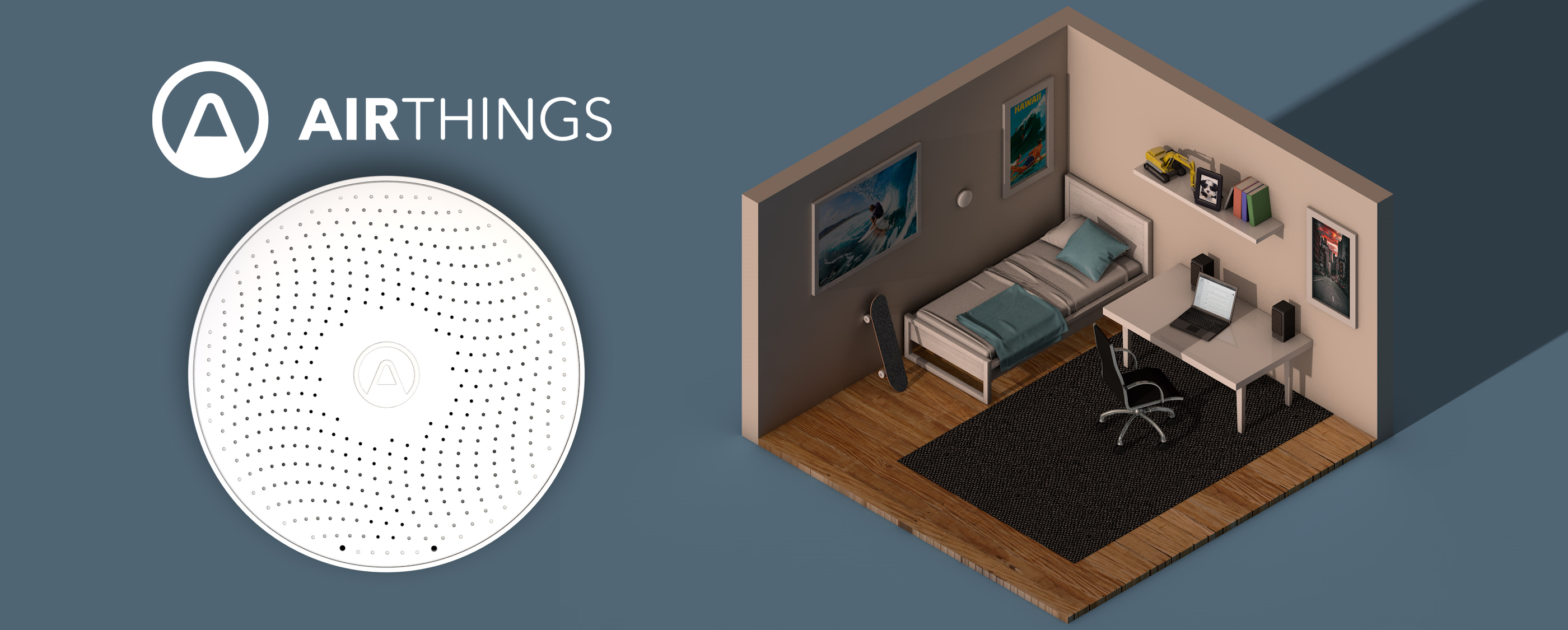
Airthings teen room

The Wave Plus is equipped with a Temperature/Humidity, VOC, Radon, and more importantly a CO2 sensor which is the first sensors to have in mind when you think teenagers. Teens tend to spend a lot of time inside their room, listening to music, studying, doing homework, watching countless videos on TikTok and Youtube, and messaging with other teens at the same time via Instagram. Teens don’t worry about air quality but I bet you all have experienced the musty smell every time you open their room door. Part of the smell is a crazy high CO2 concentration combined with VOCs.Read More »

Low-Cost Portable Monitors vs Reference Monitors Part2

A long time has passed since I wrote Part 1, and I presented the results for NO2 and PM2.5 measurements between the low-cost sensors and the reference monitors. Due to the COVID-19 pandemic, laboratories were closed for 2 months so they couldn’t send me the results but since the 1st of June, I have the results in my hands.

Dates  PM 2.5 Mediterráneo
31/01/2020 15,83 µg/m3
03/02/2020 17,35 µg/m3

These are the data they sent me. Two daily average values for the 31st of January and the 3rd of February. Data for the 1st and 2nd of February weren’t available for a validity reason.

I know it is ridiculous for an urban state reference station to give you just two values for four days. I am curious to learn what exactly they do with these values, what kind of studies (rolling my eyes now).

Unfortunately, I am unable to compare the PM2.5 low-cost sensors with the BAM results as I wanted, so the only thing I could do is to average the values from the low-cost sensors for the specific days and place them side by side. However, it won’t do it as it will create a huge confusion.

Conclusion

You start evaluating portable low-cost sensors, and you end up finding that the official city station is so outdated (accurate but outdated). This is the reason I am going to review an outdoor monitor (Clarity) that is designed specifically for cities that lack real-time PM2.5 monitoring, and it can offer a denser spatial coverage.

Regarding the Atmotube Pro and Flow 2, I will also compare them against the outdoor monitor in order to get a better idea about the PM2.5 monitoring capabilities.