
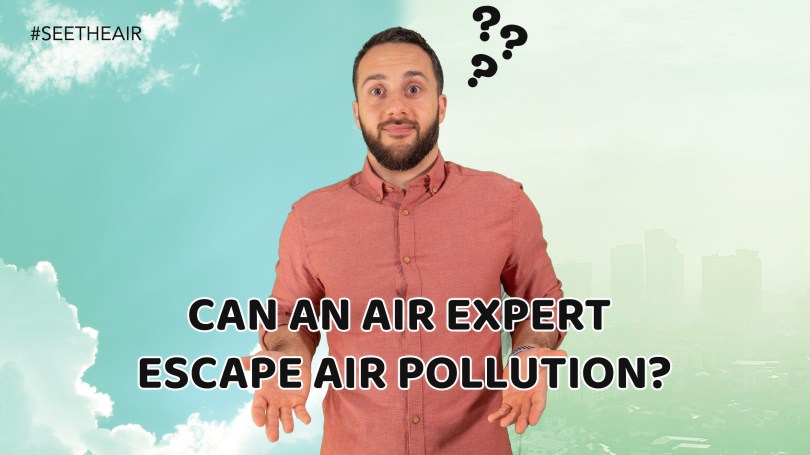
Air pollution is an invisible threat, silently impacting our health. But what if you knew exactly where it lurked, both indoors and outdoors? Could an air quality expert, armed with this knowledge and personal equipment, achieve the World Health Organization’s (WHO) air quality guidelines for extended periods?
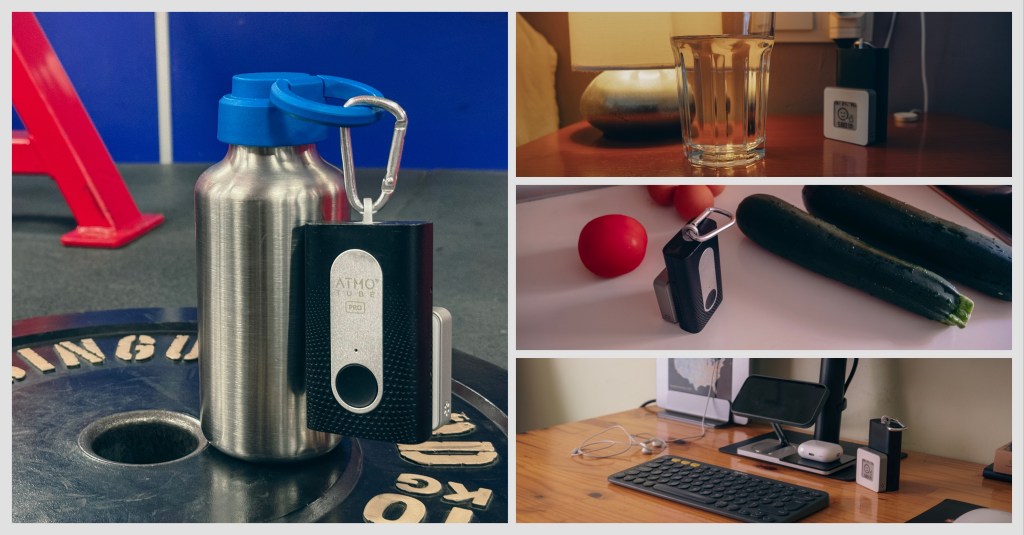
This is the question I, Sotirios Papathanasiou, an air quality expert, will try to figure out over the next year. Starting July 1st, 2024, I embarked on a unique experiment, tracking my personal air quality for a full year. I am monitoring two key air quality metrics: Carbon Dioxide (CO2) and PM2.5 (fine particulate matter). However, PM2.5 data will be excluded when relative humidity surpasses 70% because the limitations of low-cost sensors. I will be carrying an Atmotube Pro and an AIRVALENT everywhere I go.
I am your human guinea pig, carrying these portable air quality monitors everywhere – from my bedroom to my gym, from my kitchen while cooking to the beach on a weekend getaway. This comprehensive data will allow us to see if, despite my expertise in pollution sources and protective measures, I can consistently meet the WHO’s air quality guidelines.
I will be the first person to openly share my air quality data with the world, in hopes of inspiring transparency and collaboration for cleaner air.
The Challenge: Meeting the WHO Standards
The WHO establishes air quality guidelines to safeguard human health. Notably, for PM2.5, the annual guideline is 5 micrograms per cubic meter (µg/m³), while the 24-hour guideline is 15 µg/m³.
Although WHO has no limits for CO2 levels, I will try to keep CO2 levels below 1,000 parts per million (ppm) as higher levels can cause drowsiness and headaches, while exceeding 5,000 ppm can lead to dizziness and difficulty concentrating. I consider that a 24-h mean value of 700 ppm will be a good indication that my overall exposure to the gas is not too high especially during night hours.
My challenge lies in consistently maintaining these levels in his personal environment wherever these may be. Can my expertise on pollution sources – like traffic fumes, cooking emissions, and even crowded rooms – help me navigate these challenges?
Unveiling the Invisible: What We Can Learn
This experiment promises valuable insights. Here’s what we hope to discover:
- The effectiveness of personal air quality monitoring: Can readily available sensors provide a clear picture of an individual’s exposure?
- The impact of daily activities: How do cooking, commuting, and spending time outdoors affect personal air quality?
- The role of mitigation strategies: Can my expertise in air purification and ventilation techniques make a measurable difference?
This year-long experiment isn’t just about Sotirios; it’s about understanding how much control we have over the air we breathe. Can we outsmart pollution, or are we destined to be forever at its mercy? Stay tuned and follow my journey to unveil the realities of personal air quality.
Disclaimer
This experiment is conducted independently and is not financially supported by any external company or organization.
Discover more from See The Air
Subscribe to get the latest posts sent to your email.
 See The Air
Thanks Sotirios for this. It will be very interesting to see your daily experiences with the air you breathe.
I guess that it will be easier for you to stay close to the WHO guidelines being in the US. When you will come to Spain in winter it will be another story…
I am using the Atmotube Pro since 3 years now, I ALWAYS carry it with me everywhere I am. It really helps me staying safer in terms of PM2.5 concentrations. It makes me less anxious about the air me and my family breathe because I can see in real time what is around us. Thanks to it, I have learned a lot on the daily choices to make in order to minimize the exposure to more polluted air in our city. And if this can be done in Athens, a topmost polluted city, it can be done with even better results in the Us and Spain.
I am looking forward to see the results of your experiment!
Andrea
LikeLiked by 1 person
I am back in Spain for a few weeks now as I resigned at the beginning of June.
LikeLike
I would like to see context: i.e. where do you live? what do local monitoring networks show? what steps have you taken to reduce exposure in your home? does your HVAC have an intake for outside air? what type air filters do you have in the HVAC system? when cooking do you always run the exhaust fan? do you cook with natural gas or propane? do you have a fireplace and if so do you use the fireplace? With context, like the above, I can get a sense of whether my situation is more or less challenging. I may be able to get a sense of how personal choices impact my “personal” air quality.
LikeLiked by 1 person