Why Lung Cancer Is on the Rise in Non-Smokers

Still a mystery, but here is what we have found so far. While the overall rate of lung cancer has been declining, a notable trend has emerged: lung cancer in people who have never smoked is increasing. This poses a challenge to the traditional understanding of the disease, which is heavily associated with tobacco use. Research suggests that for some, lung cancer in non-smokers is a distinct disease from that in smokers, driven by different factors and presenting in a different form.

Environmental and Lifestyle Factors

A major contributing factor to lung cancer in non-smokers is exposure to environmental carcinogens.

Read More »

Review: AirGradient Open Air

Having had the opportunity to get the AirGradient Open Air (Model O-1PST) at the ASIC 2025 conference in Thailand, complete with its unique engraving, I’ve spent some time with this device, and it’s clear that AirGradient is pushing the boundaries of accessible and reliable outdoor air quality monitoring. This device presents a compelling alternative to existing solutions, particularly for those seeking transparency and robust performance.

Technical Specifications O-1PST

  • WiFi 2.4GHz IEEE 802.11 b/g/n-compliant
  • Bluetooth LE: Bluetooth 5, Bluetooth mesh
  • Status LED
  • Plantower PMS5003T for PM2.5 + ENS210 for T/RH
  • SenseAir S8/S88 CO2 NDIR Sensor
  • Sensirion SGP41 TVOC/NOX Module
  • Enclosure: ASA Plastic, UV Resistant and Weather Proof
  • Mounting Options: Wall or pole mounting options
  • 4m USB-C to USB-A Cable
  • USB-C Power Connector 2A/5V
  • Certifications: CE, RoHS, REACH, FCC

Sensor Selection: A Thoughtful Approach

The Open Air features a well-considered suite of sensors designed for accurate and insightful data. For PM2.5 measurements, it utilizes the Plantower PMS5003T, a sensor known for its reliability and found in other popular monitors like the PurpleAir (though it’s important to note the PMS5003T is a similar but not identical variant).

Read More »

Spectroscopy: The Next Step for Low-Cost Particulate Matter Sensors

The landscape of ambient air quality monitoring is evolving, driven by the increasing availability of low-cost sensors. While current low-cost particulate matter (PM) sensors, which rely on light scattering, provide valuable data on particle size and number, they lack the ability to determine a particle’s composition. This limitation is a significant hurdle in understanding the true nature and origin of air pollution. The future of affordable PM sensors lies in spectroscopy, a technique that will allow for a more detailed analysis of airborne particles.

Read More »

The One Health Approach and the Treaty of Lisbon’s Competences

The Treaty of Lisbon frames the European Union’s ability to act, creating a structural conflict between its strict division of competences and the comprehensive, borderless nature of the One Health (OH) approach required for effective pandemic proactiveness.

The One Health Approach and the Treaty of Lisbon’s Competences

The European Union’s implementation of its proactive pandemic strategy through the One Health (OH) approach must navigate the Treaty of Lisbon’s (ToL) division of powers, primarily relying on two categories:

  1. Shared Competence (Article 4 TFEU): The OH strategy will be most robustly implemented by leveraging the EU’s power in Environmental policy. Since the OH model focuses on tackling environmental disruptors (like climate change and deforestation) that increase zoonotic risk, the EU can adopt binding, harmonizing acts in the environmental sphere. Similarly, its role in supporting the European Research Area and funding research into health threats falls under the shared competence of research, technological development, and space.
  2. Supporting Competence (Article 6 TFEU): The direct impact on human health protection and improvement is constrained by this category. The EU can only support, coordinate, or supplement Member State actions. While it can coordinate responses via bodies like Health Emergency Preparedness and Response (HERA), it cannot adopt legal acts that enforce a common, harmonized EU standard for healthcare practices or general public health laws across the bloc.
Read More »

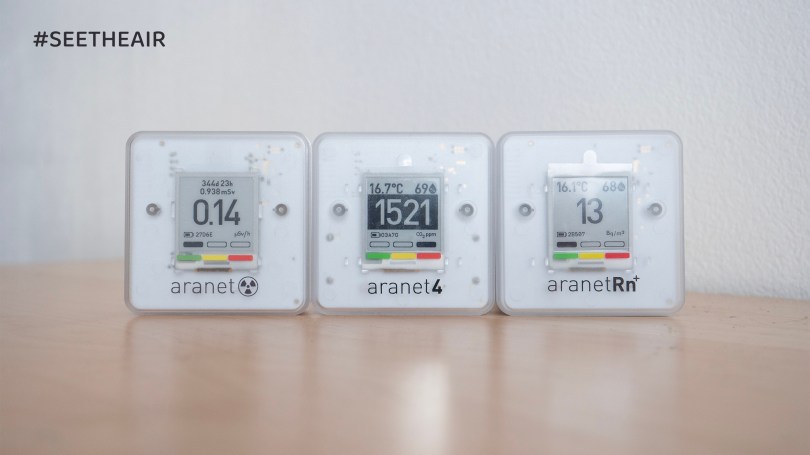
aranet: Comprehensive Environmental Monitoring for a Healthier Home

In an era where indoor air quality and environmental safety are of a high importance, aranet has emerged as one of the leaders in providing reliable and intuitive monitoring solutions. See The Air has thoroughly reviewed several of aranet’s innovative products, each designed to empower individuals with crucial insights into their living spaces. From carbon dioxide levels to radon gas and even radiation, aranet offers peace of mind through precise and accessible data.

Most aranet monitors stand out by providing a holistic view of your environment, often including temperature, relative humidity, and atmospheric pressure alongside their primary measurements. This multi-parameter approach helps users understand the interplay of various factors affecting their indoor comfort and health.

Read More »

The CO2 Debate: A Parallel to the Egg Dilemma

The discussion around carbon dioxide (CO2) in indoor air quality (IAQ) often brings up a fascinating parallel to another long-standing debate: the health effects of eggs.

The Indisputable Value (Eggs & CO2 as Proxies):

Just as eggs are widely recognized for their nutritional value – a powerhouse of protein, vitamins, and minerals – CO2 in IAQ assessment holds an undeniable, practical value. We know that CO2 levels are incredibly useful as a proxy. They effectively signal ventilation rates, which in turn are crucial indicators for the potential airborne transmission of diseases and the presence of odors indoors. In this sense, CO2 is a vital tool for understanding and managing our indoor environments, much like eggs are a staple in many healthy diets.

Read More »

The Unseen Air Inside Classrooms

In the modern classroom, the focus is often on technology, curriculum, and engagement. However, a critical element that directly impacts student health and learning often goes overlooked: the air they breathe. In many schools, especially older buildings, ventilation systems are inadequate or non-existent. This can lead to a buildup of pollutants and, most critically, an increased risk of airborne infections.

The importance of good air quality cannot be overstated. A well-ventilated space keeps the concentration of airborne particles at bay, including viruses and bacteria. When traditional ventilation falls short, supplementary solutions become essential. This is where air purifiers, both commercial and do-it-yourself (DIY), offer a viable and often more affordable solution.

Read More »

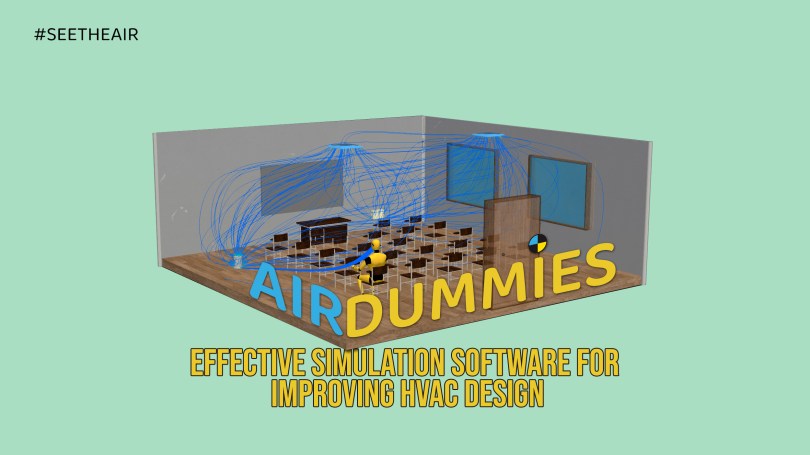
AirDummies: A Breath of Fresh Air for Indoor Environment Simulation

AirDummies emerges as a highly intuitive and powerful Computational Fluid Dynamics (CFD) software, purpose-built to demystify the complex world of indoor air dynamics. Designed with a clear focus on accessibility, it caters to a broad spectrum of users, offering invaluable insights into air patterns within diverse indoor environments, including school classrooms, offices, and domestic settings. Its ability to simulate everything from CO2 concentrations, particle contaminants, and temperature gradients to air velocity makes it an indispensable tool for optimizing comfort, health, and energy efficiency.

AirDummies is built upon the OpenFOAM open-source library. This foundational relationship means AirDummies leverages OpenFOAM’s extensive capabilities for simulating fluid flow, heat transfer, and related phenomena. By utilizing OpenFOAM, AirDummies benefits from a robust, well-validated, and continuously developed CFD engine, providing users with a powerful and flexible platform for their simulation needs.

Read More »

Latvia’s Model for Healthy Learning: The MESH Air Quality Project

Latvia has successfully deployed 14,000 CO2 monitors in hundreds of schools, ensuring safer and healthier learning environments for students and teachers. This nationwide initiative, launched by the Ministry of Education and Science of Latvia and implemented by the technology company MESH, addresses concerns about elevated CO₂ levels, which can contribute to the transmission of pathogens and affect concentration. Such successful projects should serve as a blueprint for others aiming to improve indoor air quality and efficiency in public buildings. The data collected from these monitors is freely accessible to the public via the website https://co2.mesh.lv/home/dashboard, providing transparency and peace of mind for parents.

The project, which involved an initial investment of €3.58M, translates to an approximate cost of 12 euros per student. This cost-effective solution was designed to significantly improve cognitive abilities and health, as well as air quality, for 300,000 children across Latvian schools. Even without adding heating control, facility managers were able to optimize energy use by simply analyzing temperature trends available online – leading to smarter manual adjustments and early savings in several municipalities. Following the project, some municipalities further developed the system by integrating automatic regulation of heat nodes, and in one case, the investment was fully recouped within a single heating season.

Read More »

Unveiling Urban Health: The ISGlobal Ranking of Cities and its Healthy Urban Design Index (HUDI)

In an era where urban populations continue to swell, understanding the intricate relationship between city design and public health is fundamental. The Barcelona Institute for Global Health (ISGlobal) has emerged as a leading voice in this field with its “ISGlobal Ranking of Cities” and the innovative “Healthy Urban Design Index (HUDI).” This comprehensive tool sheds light on the health impacts of urban exposures like air pollution, noise pollution, and access to green spaces across nearly 1,000 European cities.

The ISGlobal Ranking of Cities is more than just a list; it’s a dynamic project aimed at quantifying the health burdens attributable to urban and transport planning. It evaluates various environmental exposures and their associated mortality, presenting cities from the highest to lowest mortality due to these factors. You can explore the tool directly on the ISGlobal Ranking of Cities website.

At the heart of this initiative is the Healthy Urban Design Index (HUDI). The HUDI is a composite score that meticulously assesses the extent to which the configuration of European cities supports the health and well-being of their inhabitants. It examines 13 key indicators across four domains: urban design, sustainable transport, environmental quality, and green space accessibility. These indicators include factors such as urban compactness, housing density, walking and cycling infrastructure, public transport availability, air pollution levels, capacity to mitigate heat, and accessibility of green spaces. Each city receives a score between 0 and 10 for each indicator, culminating in an overall HUDI score.

Read More »