The Hidden Threat in Our Air: Why Measuring Indoor Ultrafine Particles (UFPs) Is a Modern Regulatory Maze

We have spent decades obsessing over PM2.5 —the fine particulate matter small enough to lodge itself in our lungs. We draft laws around it, track it on our phones, and buy home monitors to avoid it. But while our regulatory gaze has been fixed on particle mass, an invisible, almost weightless army of much smaller particles has been slipping through the cracks: Ultrafine Particles (UFPs).

Known technically as PNC0.1, these aerosols have an aerodynamic diameter of 100 nanometers or less. To put that in perspective, they represent a negligible fraction of total ambient mass, yet they often make up over 90% of the total particle number concentration (PNC) in our atmosphere. Because they are so unbelievably small, they don’t just settle in the lungs—they have the unique physical ability to cross into the bloodstream, posing distinct and severe health risks.

Yet, when we step inside our homes, we enter a measurement blind spot. In our current study across two Spanish cities—Granada and Almeria—we exposed a frustrating reality: meeting current PM2.5 standards provides a completely false sense of security when it comes to UFP exposure, and our current measurement tools and guidelines make it nearly impossible to tell if the air we breathe inside is actually safe.

Read More »
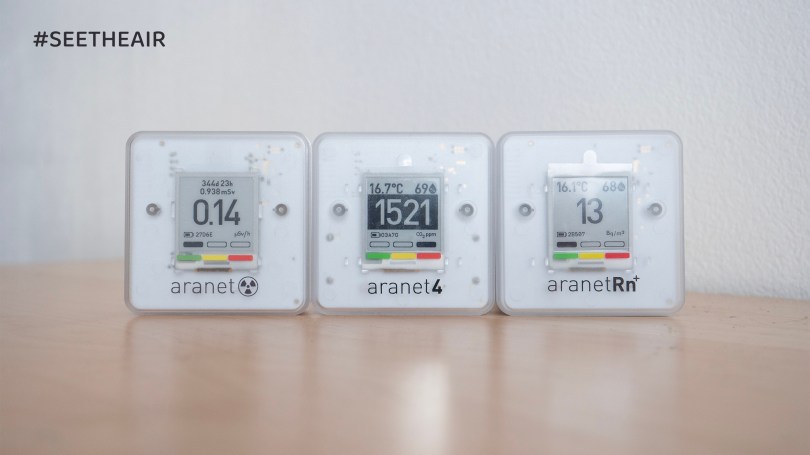
aranet: Comprehensive Environmental Monitoring for a Healthier Home

In an era where indoor air quality and environmental safety are of a high importance, aranet has emerged as one of the leaders in providing reliable and intuitive monitoring solutions. See The Air has thoroughly reviewed several of aranet’s innovative products, each designed to empower individuals with crucial insights into their living spaces. From carbon dioxide levels to radon gas and even radiation, aranet offers peace of mind through precise and accessible data.

Most aranet monitors stand out by providing a holistic view of your environment, often including temperature, relative humidity, and atmospheric pressure alongside their primary measurements. This multi-parameter approach helps users understand the interplay of various factors affecting their indoor comfort and health.

Read More »

Carbon Monoxide: The Silent Killer Lurking Indoors

Carbon monoxide (CO), often referred to as the “silent killer,” is a colorless, odorless, and tasteless gas that can be deadly when inhaled in high concentrations. While it is often associated with outdoor air pollution, CO can also pose a significant risk within our homes and workplaces.

Furthermore, while carbon monoxide is often associated with acute poisoning, leading to immediate symptoms like headaches, dizziness, and nausea (hence we have CO alarms), it can also have long-term health consequences. Even exposure to low levels of CO over extended periods can cause damage to various organs and systems. Chronic CO exposure has been linked to chronic fatigue, memory problems, work difficulties, sleep disorders, dizziness, neurological disorders, paresthesia, recurrent infections, abdominal pain, and diarrhea 1, 2.

Read More »

Indoor Environmental Quality and Radiation Exposure

While we often think about indoor pollutants such as particle pollution (PM2.5), Carbon Dioxide (CO2), etc, the quality of the indoor environments (IEQ) can also have a significant impact on our health through various sources of radiation exposure within our homes and workplaces. Radiation is not commonly investigated nor monitored indoors.

Beyond the Usual Suspects:

Let’s explore some unexpected sources:

  • Frequent Flyers: Cosmic radiation exposure increases with altitude. While infrequent flights pose minimal risk, frequent flyers may experience slightly elevated radiation levels.
  • Ground Elements: Radioactive elements like uranium naturally occur in soil and rocks. Depending on the geology of your area, these elements can seep into basements or crawlspaces, releasing radon gas, a known human carcinogen. Radon forms from the breakdown of uranium, radium, and thorium, which are naturally present in rocks, soil, and water. As radon gas seeps into buildings through cracks and gaps in foundations, it can accumulate to dangerous levels.
  • Vintage Timekeepers: Those vintage watches with luminous dials might be harboring a radioactive secret. Radium or tritium, once used for illumination, can pose a health risk.
  • Colorful Contaminants: Certain ceramics and glassware use glazes containing radioactive elements for vibrant colors. While generally “safe” when intact, chipping or breaking these items can release radioactive particles.
  • Food: Bananas, spinach, oranges, beer, etc. all contain potassium K-40 which is a radioactive isotope that emits beta and gamma radiation. The dose of radioactivity they deliver is tiny and does not pose a health risk.
  • Nuclear Power Plants: Nuclear power plants are heavily regulated and emit very low levels of radiation during normal operation. While unlikely, a serious accident at a nuclear power plant could release dangerous amounts of radiation.
  • War Zones: Radiation exposure is a serious danger in a war zone if a nuclear weapon is detonated.
Read More »

Over-the-Range Hood Microwaves: Addressing Indoor Air Quality Concerns

Over-the-range hood microwaves offer the convenience of a combined microwave and “ventilation” system. However, a common misconception is that they effectively remove cooking fumes and pollutants from the kitchen. While they do have a fan system, it’s crucial to understand their limitations.

Recirculation vs. True Ventilation:

Unlike range hoods that vent exhaust outdoors, most over-the-range microwaves utilize a recirculation system. This means they draw in cooking fumes, grease, and moisture through a metallic mesh filter with holes bigger than a Swiss cheese, then release the “treated” air back into the kitchen.

Read More »

Beyond the Pleasant Smell: The Hidden Dangers of Air Fresheners in Your Home

We all like our homes to smell fresh (not possible) and inviting. But that seemingly harmless air freshener, scented candle, or electric perfume dispenser might be doing more harm than good. In fact they do and you will understand in detail below. These common household items can release a surprising number of chemicals that negatively impact indoor air quality and potentially our health.

The Culprit: Volatile Organic Compounds (VOCs)

All air fresheners, regardless of form (spray, plug-in, candle), rely on volatile organic compounds (VOCs) to create their signature scents. VOCs are chemicals that easily become gases at room temperature. While some VOCs occur naturally, those found in air fresheners are often synthetic and can irritate the eyes, nose, and throat.

Read More »

Air Pollution Chronicle (Granada, Spain Edition)

They say that good air quality is a fundamental right for all, and at the same time, they say that 99% of the population worldwide is exposed to air pollution above WHO Air Quality Guidelines. Mixed messages here. Even though I have already shared the story on a Tweet thread, I decided to write an article as well because of the permanence of the article and because it is easier to share.

December 17th, 2023

I arrived in Granada, Spain for the holidays. A blanket of smoke was covering Granada and the small towns around with a total area of over 100 km2. Although I was super tired, the intense smell of smoke inside the apartment and the fact that I knew that there was a lot of particulate pollution indoors didn’t permit me to sleep well.

Read More »

Wildfires and Indoor Air Quality

It was brought to my attention by Dr. Howook Chang that most media are talking about wildfires, what the color of the sunset looks like, and that people shouldn’t go outside. However, no one is talking about the fact that smoke can infiltrate houses quite easily. Wildfire smoke can join you during dinner or while you are sleeping.

Air quality matters more indoors where we spend most of our time. So here is a series of things to keep in mind in order to breathe healthy air.

Monitor Air Quality

First of all, measure the air quality indoors and outdoors. The reason we need to measure both environments is that we need to benchmark the conditions and take decisions based on the data we have collected. Pollutants can easily come inside the house during ambient pollution events, whether is a wildfire, traffic, or a dust storm (e.g. Sahara Dust). Windows, doors, HVAC systems, or simply not good insulation are some of the main entrances of pollution indoors.

Read More »

Modern Houses & Indoor Air Quality 🏡

One will think that the more modern the house, the better the indoor air quality. However, that’s not always the truth as recently I discovered that many houses have inadequate appliances that will create harmful air pollutants and some of them will falsely mitigate contaminants by creating a false sense of remediation.

Example #1

Gas cooktops are a must according to good chefs as the pans are able to heat immediately and you have more control of the heat. That’s not true as the new induction cook tops are able to heat the bottom of the pans as fast without releasing harmful pollutants like Nitrogen dioxide.

Read More »

Back Indoors – Indoor Air Quality is still a thing, here is why!

Autumn and Winter are almost here for the Northern Hemisphere which means a vast majority of the population is going to leave terraces and other open outdoor spaces for indoor spaces (offices, classrooms, homes, indoor restaurants, etc). Covid-19 is still present, but most importantly, we are going to breathe lots of indoor air. We need to take control of the air we breathe as indoors is much easier to diminish the quantity of pollutants we inhale than been outside.

Covid-19 has ruined the lives of many people, personally, I believe that it is very easy to combat the spread of the virus in enclosed spaces, but we need to follow the rules of proper ventilation and purification combined. Scientists have developed various kinds of technologies that can capture pollutants and pathogens. I don’t want to focus very much on the pandemic rather than how important is to breathe clean and fresh air indoors for so many other reasons.

Read More »