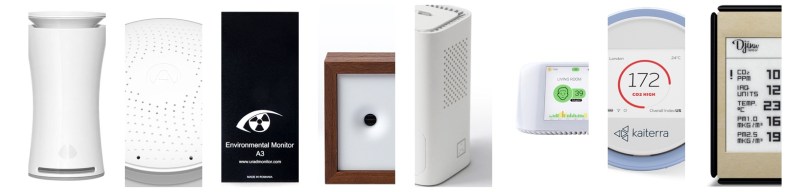
Fitness Air Quality Monitor, is that possible?

Over the years, I have spoken with many companies in the field of air quality and once in a while, companies will tell me that they want athletes to purchase their devices in order to improve performance. I am always skeptical about this because I haven’t seen any integration of fitness data with the AQ monitors so far that could give some possible adverts or ways for the athlete to improve their performance. You don’t expect people to make assumptions you have to give them results and guide them in the right direction.

During covid-19 lockdown, I worked out at home and as I have access to a lot of data (fitness and air quality) I decided to make some experiments and see how my body reacts to poor indoor air quality and good indoor air quality and if the whole hypothesis works.

Smartwatches are very common these day and all of them feature a heart rate monitor and many more sensors. Recently, Apple and Fitbit released pulse oximeter sensors in their latest wearables. These new sensors in the smartwatches could unlock many more potentials and provide us with data that could save lives.

Let’s continue with the argument of what current AQMs could do if they combine fitness data. First of all, there is a possible problem. In case the monitor is stationary then it won’t be able to tell if the user was near the device or not during the workout session but this could be addressed as most times fitness data come along with GPS coordinates. By allowing the device to access the location data only when the user is in the same location as the AQM (home, gym, etc.) we solve the issue. Another possible solution is if the monitor comes with a Bluetooth/Ultra Wideband chip then it can easily sense the presence of the athlete/individual.Read More »

Dear Air Purifier Manufacturers

An Introduction

Air purifiers are machines that help us breathe cleaner air when for some reason the air quality indoors is bad. There are a lot of companies and models out there for costumers to choose and most of them offer some kind of High-efficiency particulate air filtration aka (HEPA).

HEPA filters are made by compressing randomly together thin fibers of glass or synthetic material like PP+PET with diameters between 0.5 and 2.0 microns. The air space between HEPA filter fibers is typically much greater than 0.3 μm.

HEPA Fiber2_0094
Clean HEPA fibres

Read More »

Free Printable or Digital Activities for kids.

I share with you a part of my book “Nicholas and his incredible eyesight”

You will find a printable or digital PDF with activities for kids during the #Covid19 lockdown. A great way for them to spend some educational time.

https://seetheair.org/wp-content/uploads/2020/03/nicholas-book-printable-activities.pdf

Be Safe!

Indoor IAQ Monitors 2019Q4

Here are all the available IAQ Monitors on the market 2019 Q4. There are so many devices out there but they all lack innovation and they all offer exactly the same technologies. Companies had better hear users feedback!

Read More »

Review: BRISE C200 Air Purifier

It was time to review an air purifier because it is a vital device for those who suffer from air pollution and allergies. The purifier that I am going to review is called BRISE C200. It was first launched in Taiwan in 2017, although the company’s headquarter is in the Netherlands with team members in Germany and Taiwan. I have been following this company since their first steps into the air quality market.

The reason I wanted to review this purifier first is because it is the first air purifier with artificial intelligence aka A.I. and because it combines two devices in one, an air quality monitor and a purifier, obviously.Read More »

Bedside Water Taste & Chemistry

Have you ever noticed that the water tastes different when you leave it in a glass on your nightstand overnight?

In general during the 8h sleep, CO2 is built inside the room. Especially in winter when we don’t ventilate as frequent and CO2 can reach levels higher than 2,000ppm inside the house. CO2 is a soluble gas and water is the perfect solvent. As a result a process called Acidification is occurred naturally and the PH lowers during that process. That gives your bedside glass of water a horrible taste.

Read More »

CO2 Candles Experiment

CO2 Candles Experiment

In this experiment I will demonstrate how fast Carbon Dioxide CO2 rises inside a room by lighting two small candles.

bedroomday1_0000 copy

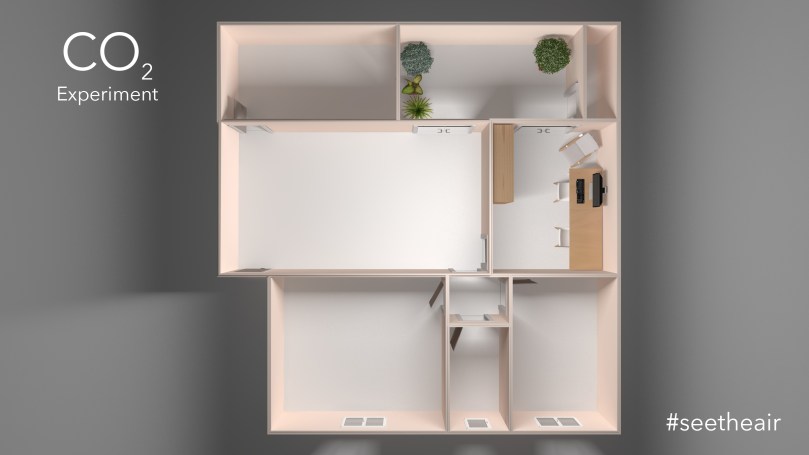
I chose my study room as it can be easily isolated, plus I have got all the AQI monitors inside this room for the purpose of the experiment. The room is 7.3m². The experiment is easy, I lit 2 candles and closed the door and window of the room. Then I waiting with myself inside the room till the CO2 reached 1200ppm. Basically I logged the time when the CO2 was 430ppm and when it reached the 1200ppm with and without the candles.

With the candles the CO2 needed 35 minutes to reach the 1200ppm limit as you can see on the graph below and without any candle and with exactly the same conditions as before the CO2 needed 59 minutes to reach the upper limit.

Conclusion

You gain 25 minutes of more oxygen and less CO2 until the room reaches the 1200ppm limit which means more productive time and fewer headaches.

Gray Slate

Candles and Incense sources of Indoor Air Pollution

Candles and Incense sources of Indoor Air Pollution

They look nice and they smell even better, but unfortunately most of them are made of toxic ingredients and when you light them, they diffuse all these toxic ingredients inside your house.

Harmful VOCs

Most commercial candles are full of toxic ingredients that many times they don’t even write on the package like Paraffin, Acetone, Trichlorofluoromethane, Carbon Disulfide, 2-Butanone, Trichloroethane, Trichloroethene, Carbon Tetrachloride, Tetrachloroethene, Chlorobenzene, Ethylbenzene, Styrene, Xylene, Phenol, Cresol and Cyclopentene. Most of them are VOCs and the majority of the AQI monitors with VOC sensor will recognize the toxins in the air. Now, when paraffin burned releases toluene and benzene which are highly toxic and carcinogens (these fumes are the same as when diesel is burnt).Read More »

See The Air: The Book

See The Air

The Essential Guide For Optimal Air Quality In Your Life

After a long time of researching and writing all the essential information about air pollution and how you can improve the air quality for you and your community, the book is ready. I am very thrilled to share this book with you all and I will be even happier if you share it with your friends and family as well. I tried to keep it as simple as possible without unnecessary information. You can see the table of contents below and take a small idea of what is inside this book.Read More »

Do Zeolite Rocks absorb VOCs?

_1010725

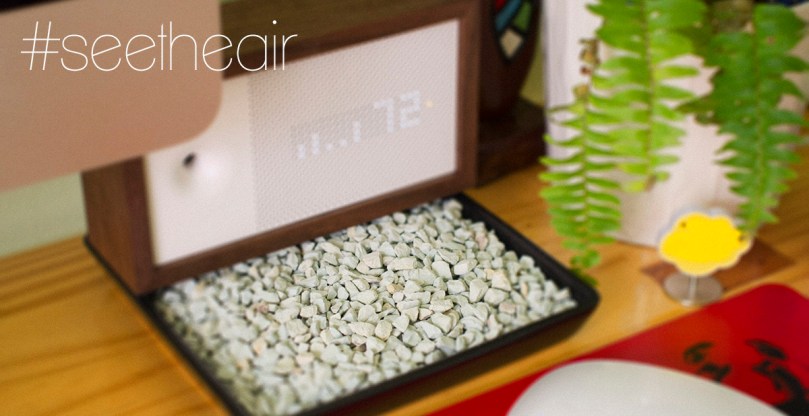
I was doing a research for ways to remove VOCs from the atmosphere without using electronic devices like air purifiers but through passive material. As a result I found about Zeolite Rocks which are claimed that can absorb formaldehyde, ammonia and other VOCs from the air or water passively.

As you may expect I purchased 500gr of small Zeolite Rocks to conduct an experiment. I want to mention here that is hard to find these rocks because they aren’t commercialized, it’s easier to find them as filters for aquarium because in general are used to remove ammonia from the water.

They also claim that the rocks are “rechargeable” by heating them in the oven in 200°C/400°F for 30min they can be used again and again.

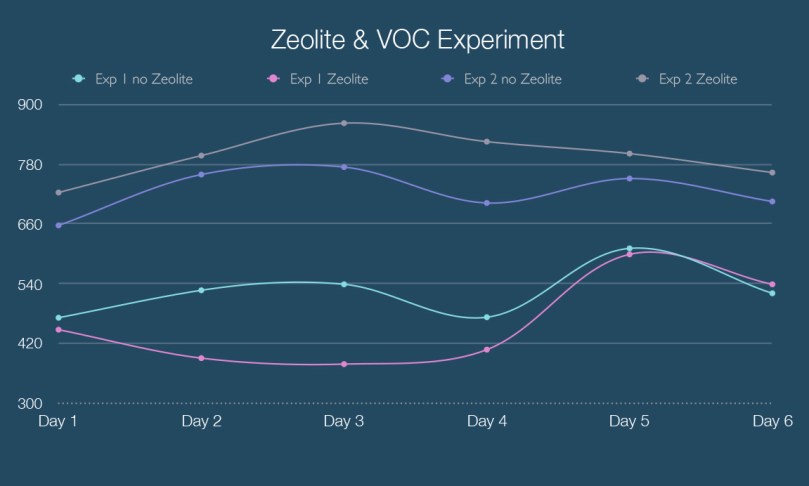
I took daily measurements for 6 days without having the rocks anywhere near the sensor and the average result for the VOCs was 524ppb. After a week I placed under the AQI monitor 400gr of Zeolite Rocks and again I logged the measurements for a week. The average result for a week of VOCs with the rocks is 461ppd. A difference of 63ppb less VOCs.

After that I repeated the experiment, 6 days without rocks and 6 days with rocks but this time I isolated the room and I kept it without ventilation. The values were higher in this case and the rocks seemed like they couldn’t absorb VOCs any more.

In conclusion the rocks may absorb gases but you need a great quantity of rocks to achieve a good result, for example 100ppd less VOCs something which make it hard. Remember by opening the windows for a few minutes you can refresh the air quality immediately in case the outdoor air is in better conditions than the indoor.

Zeolite chart