Review: uRAD Monitor A3

Who says that everything is made in China or USA? Well, let me introduce you the uRAD Monitor A3 an Air Quality Monitor which is made in Romania, Europe since 2012. The design, firmware design, server software and big data database maintenance and development are all made there and amazingly enough even the unit that I have on my hands is made personally by the CEO Radu Motisan. As a result I am very proud to review it and talk about the cons and pros.

Features:

  • Temperature Sensor -40°C to +85°C / 40°F to 185°F
  • Humidity Sensor RT 0-100%
  • Air Pressure Sensor 300-1,100mbar
  • VOC Sensor 0 mg/m³ to 100 mg/m³ reducers – 10 mg/m³ oxidizers
  • PM2.5 Sensor 0 μg/m³ to 1000 μg/m³
  • Formaldehyde Sensor 0 ppm to 5 ppm
  • Carbon Dioxide Sensor 400 ppm to 5000 ppm
  • γ (gamma), x-rays Sensor 0.01μSv/h to 9999.99μSv/h
  • WiFi or LoraWAN or Ethernet or GSM
  • Built-in Speaker
  • LED Light

Read More »

uHoo vs AirVisual vs Awair

On this article I am going to compare three AQI monitors: AirVisual, uHoo and Awair.

All the monitors were placed together in the guest room in my house, as you can see on the picture above. I chose that room because I wanted to be able to isolate the devices from the rest of the house and from human interaction especially for the first 21 measurements. No one was allowed in that room during those measurements. After those 21 random measurements which were taken during 4 days period of time I opened the door and I created some “air pollution”. The whole experiment lasted 10 days. Below you can see the graphs with all the sensors and monitors.

Read More »

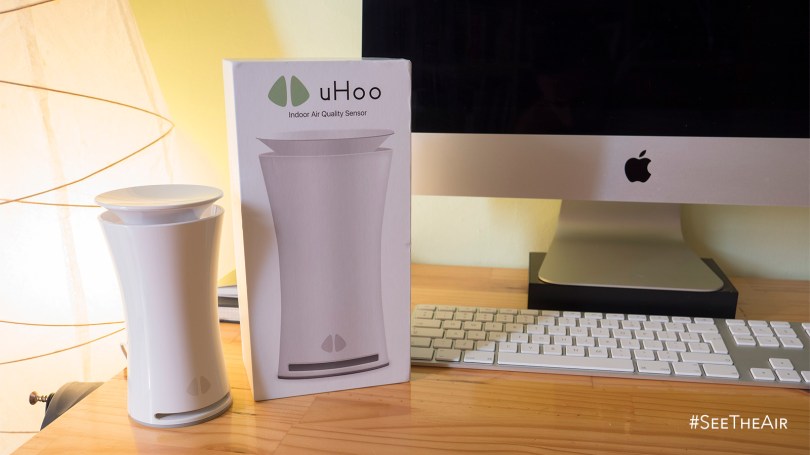
Review: uHoo AQI Monitor

Finally is here. After having an adventure with the postal service for +40 days the uHoo device found its way to my home. I want to thank uHoo for its persistence.

Let me start by saying that this is a very promising device because it features 9 separate Sensors for Air Quality monitoring and there isn’t any other device with so many sensors for indoor use. The company was founded in August 2014 and it took them two and a half years to develop uHoo.

Features:

  • RGB LED Light
  • Temperature Sensor -40°C to 85°C / 40°F to 185°F
  • Humidity Sensor RT 0-100%
  • Air Pressure Sensor 300-1,100mbar
  • Carbon Dioxide CO2 Sensor 400-10,000ppm
  • Carbon Monoxide CO Sensor 0-1000ppm
  • VOC Sensor 0-1,000ppb
  • PM2.5 Sensor 0-200ug/m³
  • Ozone O3 Sensor 0-1,000ppb
  • *Nitrogen Dioxide NO2 Sensor 0-1000ppb
  • Micro USB Power Input 5V DC
  • WiFi 802.11 b/g/n @ 2.4 GHz

Read More »

Bedside Water Taste & Chemistry

Have you ever noticed that the water tastes different when you leave it in a glass on your nightstand overnight?

In general during the 8h sleep, CO2 is built inside the room. Especially in winter when we don’t ventilate as frequent and CO2 can reach levels higher than 2,000ppm inside the house. CO2 is a soluble gas and water is the perfect solvent. As a result a process called Acidification is occurred naturally and the PH lowers during that process. That gives your bedside glass of water a horrible taste.

Read More »

CO2 Candles Experiment

CO2 Candles Experiment

In this experiment I will demonstrate how fast Carbon Dioxide CO2 rises inside a room by lighting two small candles.

bedroomday1_0000 copy

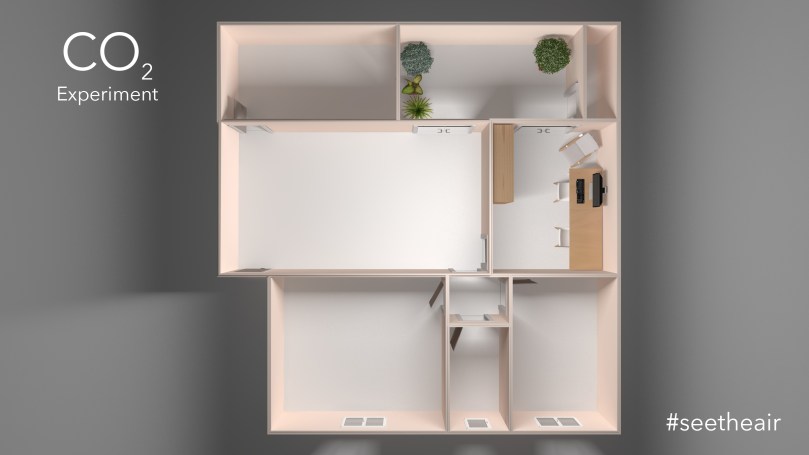
I chose my study room as it can be easily isolated, plus I have got all the AQI monitors inside this room for the purpose of the experiment. The room is 7.3m². The experiment is easy, I lit 2 candles and closed the door and window of the room. Then I waiting with myself inside the room till the CO2 reached 1200ppm. Basically I logged the time when the CO2 was 430ppm and when it reached the 1200ppm with and without the candles.

With the candles the CO2 needed 35 minutes to reach the 1200ppm limit as you can see on the graph below and without any candle and with exactly the same conditions as before the CO2 needed 59 minutes to reach the upper limit.

Conclusion

You gain 25 minutes of more oxygen and less CO2 until the room reaches the 1200ppm limit which means more productive time and fewer headaches.

Gray Slate

Candles and Incense sources of Indoor Air Pollution

Candles and Incense sources of Indoor Air Pollution

They look nice and they smell even better, but unfortunately most of them are made of toxic ingredients and when you light them, they diffuse all these toxic ingredients inside your house.

Harmful VOCs

Most commercial candles are full of toxic ingredients that many times they don’t even write on the package like Paraffin, Acetone, Trichlorofluoromethane, Carbon Disulfide, 2-Butanone, Trichloroethane, Trichloroethene, Carbon Tetrachloride, Tetrachloroethene, Chlorobenzene, Ethylbenzene, Styrene, Xylene, Phenol, Cresol and Cyclopentene. Most of them are VOCs and the majority of the AQI monitors with VOC sensor will recognize the toxins in the air. Now, when paraffin burned releases toluene and benzene which are highly toxic and carcinogens (these fumes are the same as when diesel is burnt).Read More »