Bedside Water Taste & Chemistry

Have you ever noticed that the water tastes different when you leave it in a glass on your nightstand overnight?

In general during the 8h sleep, CO2 is built inside the room. Especially in winter when we don’t ventilate as frequent and CO2 can reach levels higher than 2,000ppm inside the house. CO2 is a soluble gas and water is the perfect solvent. As a result a process called Acidification is occurred naturally and the PH lowers during that process. That gives your bedside glass of water a horrible taste.

Read More »

CO2 Candles Experiment

CO2 Candles Experiment

In this experiment I will demonstrate how fast Carbon Dioxide CO2 rises inside a room by lighting two small candles.

bedroomday1_0000 copy

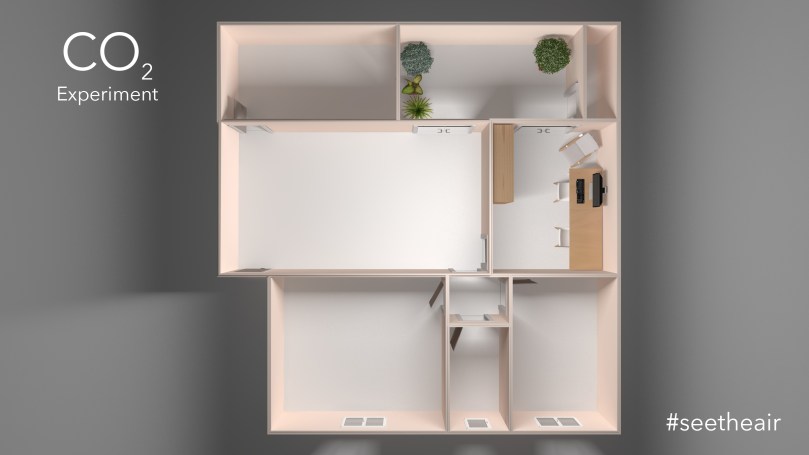
I chose my study room as it can be easily isolated, plus I have got all the AQI monitors inside this room for the purpose of the experiment. The room is 7.3m². The experiment is easy, I lit 2 candles and closed the door and window of the room. Then I waiting with myself inside the room till the CO2 reached 1200ppm. Basically I logged the time when the CO2 was 430ppm and when it reached the 1200ppm with and without the candles.

With the candles the CO2 needed 35 minutes to reach the 1200ppm limit as you can see on the graph below and without any candle and with exactly the same conditions as before the CO2 needed 59 minutes to reach the upper limit.

Conclusion

You gain 25 minutes of more oxygen and less CO2 until the room reaches the 1200ppm limit which means more productive time and fewer headaches.

Gray Slate

Candles and Incense sources of Indoor Air Pollution

Candles and Incense sources of Indoor Air Pollution

They look nice and they smell even better, but unfortunately most of them are made of toxic ingredients and when you light them, they diffuse all these toxic ingredients inside your house.

Harmful VOCs

Most commercial candles are full of toxic ingredients that many times they don’t even write on the package like Paraffin, Acetone, Trichlorofluoromethane, Carbon Disulfide, 2-Butanone, Trichloroethane, Trichloroethene, Carbon Tetrachloride, Tetrachloroethene, Chlorobenzene, Ethylbenzene, Styrene, Xylene, Phenol, Cresol and Cyclopentene. Most of them are VOCs and the majority of the AQI monitors with VOC sensor will recognize the toxins in the air. Now, when paraffin burned releases toluene and benzene which are highly toxic and carcinogens (these fumes are the same as when diesel is burnt).Read More »