Lessons from a Full Year of Personal Air Quality Monitoring

We firmly embrace technology because it grants us the power to see what is otherwise invisible: the continuous, shifting dynamics of the air we breathe.

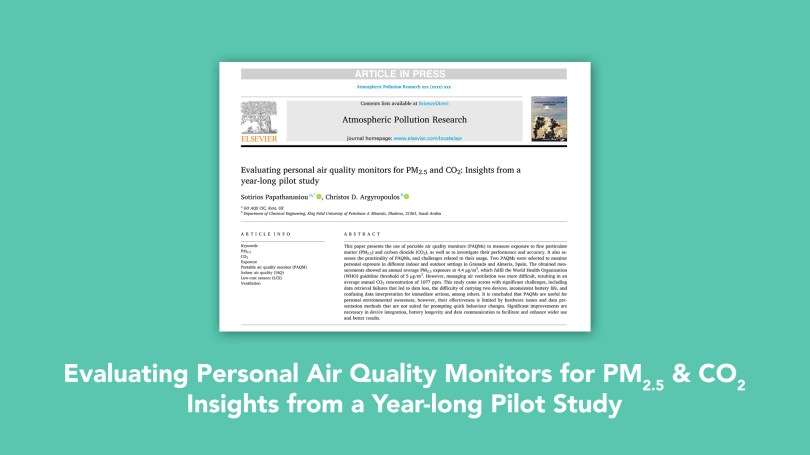
We are excited to share that our research paper, titled “Evaluating personal air quality monitors for PM2.5 and CO2: Insights from a year-long pilot study,” has been officially published in Atmospheric Pollution Research (DOI: 10.1016/j.apr.2026.103210).

Here is a brief overview of our journey and what drove this study.

The Year-Long Study

Our pilot study ran for a full 367 days, spanning from mid-summer 2024 to mid-summer 2025. We deliberately carried two portable air quality monitors with us everywhere we went to experience all seasonal changes and daily environmental challenges.

While device technology continues to evolve, carrying these monitors every day taught us a tremendous amount about human exposure and the practical realities of personal air monitoring.

Read More »

Book Review: The Time Thief by Simon Jones

In The Time Thief — The Broken Promise of Our Buildings and the Fight for the Air We Breathe, Simon Jones presents a sobering “manifesto” that unmasks a silent systemic failure within our modern built environment. While the title might initially evoke a sense of mystery, Simon meticulously explains throughout the narrative that the “Time Thief” is not a metaphor, but a literal description of how poor indoor air quality and structural failures rob us of our literal lifespan. By detailing the physiological and societal toll of the “invisible pollutants” that compromise human health, Simon justifies his chosen title, demonstrating how the very buildings intended to protect us are, in fact, stealing years of our lives.

Throughout the book, Simon anchors his argument in four fundamental truths that challenge our complacency regarding the built environment.

The Truth of the Inhalable Diet

One of the most striking “truths” shared by experts like Tanya Kaur Bedi is the concept of the “inhalable diet”. While society is obsessed with the quality of the 2,000 calories we eat daily, we largely ignore the 10,000 to 15,000 liters of air we consume every single day. This truth highlights a dangerous double standard: we would never accept lead-contaminated tap water, yet we routinely accept air filled with a “transparent chemical soup” of VOCs, particulates, and nitrogen dioxide.

The Truth of Compliance vs. Safety

A central theme discussed by experts like Nathan Wood and Chris Rush is the “race to the bottom” regarding building standards. The book argues that “compliant” does not mean “safe,” as minimum legal standards often become the maximum ambition for developers. This truth reveals a culture where ventilation is treated as a technical add-on or a “toaster” to be plugged in and forgotten, rather than a critical “life-safety system” comparable to a fire alarm.

The Truth of Data and Visibility

The book champions the “Data Truth” as a primary tool for accountability. Experts like Jenny Danson, myself and others emphasize that because poor air quality is invisible, it does not trigger the same visceral response as a visible threat like a mouldy wall. By using low-cost monitors to make the invisible measurable, residents and workers can finally demand healthier environments and move away from “tenant-blaming” toward evidence-based structural changes.

The Truth of Health Inequity

Perhaps the most painful truth Jones explores is the “postcode lottery” of air quality. Experts note that the ability to breathe clean air has become a luxury tied to wealth and geography, creating a “triple jeopardy” where the most vulnerable people often live in the most polluted, poorly maintained environments with the least power to change them. Jones and contributors like José Luis Castro argue that clean indoor air must be defended as a universal human right rather than a premium feature.

The Time Thief is ultimately an urgent call to break the silos between the medical community and the construction industry. It moves beyond technical jargon to present air quality as a moral issue, forcing us to choose between continuing to normalize building failure or taking collective responsibility for the air that literally shapes our lives.

I highly recommend this book for anyone interested in health, architecture, or social justice. It moves beyond technical jargon to present air quality as a moral issue, forcing us to choose between continuing to normalize building failure or taking collective responsibility for the air that shapes our lives.

You can find the book here: The Time Thief on Amazon

The CO2 Debate: A Parallel to the Egg Dilemma

The discussion around carbon dioxide (CO2) in indoor air quality (IAQ) often brings up a fascinating parallel to another long-standing debate: the health effects of eggs.

The Indisputable Value (Eggs & CO2 as Proxies):

Just as eggs are widely recognized for their nutritional value – a powerhouse of protein, vitamins, and minerals – CO2 in IAQ assessment holds an undeniable, practical value. We know that CO2 levels are incredibly useful as a proxy. They effectively signal ventilation rates, which in turn are crucial indicators for the potential airborne transmission of diseases and the presence of odors indoors. In this sense, CO2 is a vital tool for understanding and managing our indoor environments, much like eggs are a staple in many healthy diets.

Read More »

The Unseen Air Inside Classrooms

In the modern classroom, the focus is often on technology, curriculum, and engagement. However, a critical element that directly impacts student health and learning often goes overlooked: the air they breathe. In many schools, especially older buildings, ventilation systems are inadequate or non-existent. This can lead to a buildup of pollutants and, most critically, an increased risk of airborne infections.

The importance of good air quality cannot be overstated. A well-ventilated space keeps the concentration of airborne particles at bay, including viruses and bacteria. When traditional ventilation falls short, supplementary solutions become essential. This is where air purifiers, both commercial and do-it-yourself (DIY), offer a viable and often more affordable solution.

Read More »

Introducing FantaMix: An Innovative DIY Ventilation Solution

At See The Air, I am always excited to share innovative approaches to improving indoor air quality. Today, I am highlighting some fantastic articles by Nathalie Roussy that delve into the world of DIY ventilation with her in-depth work on the FantaMix.

FantaMix Review: A Look at Performance and Impact

Nathalie’s comprehensive review, titled “FantaMix Review,” was originally published on Medium. You can read her full article here.

The FantaMix is a compact, open-source ventilation system designed for home construction at a low cost. Nathalie, who is the designer and tester of the FantaMix, explains how this hybrid device filters a mix of fresh outdoor air and stale indoor air through an H11 HEPA filter, all while recovering lost heat. It functions as both a source of fresh air and an indoor air purifier.

Her article covers the origins of the FantaMix, how it works, and the results of various field tests, including airflow rate, noise level, heat recovery, and power consumption. She also provides a comparison with similar devices and a visual analysis of CO₂ levels to demonstrate its impact on air quality. Nathalie emphasizes that the FantaMix is a DIY project, offering an accessible solution for enhancing indoor air quality, particularly for renters or those with budget constraints, and is especially beneficial during events like wildfires.

Building the FantaMix: Your Step-by-Step Guide

For those inspired to build their own FantaMix, Nathalie has also published a detailed DIY guide titled “Building the FantaMix: Fresh Filtered Air at Home — No Exhaust, Under $200,” also available on Medium. Find the complete guide here.

This step-by-step open-source guide outlines how to create this affordable and effective home ventilation system. The FantaMix aims to provide fresh, HEPA-filtered outdoor air with partial heat recovery, costing under $200 and requiring no major construction or exhaust system. The project is 100% open source, promoting accessible knowledge over opaque products. The article covers the detailed construction process, including building the base, assembling the top section, preparing the outdoor air intake panel, and installing components like fans, insulation, and wiring. It also includes a detailed cost breakdown, a list of essential and optional tools, and crucial safety precautions, especially when working with materials like heated foam. Maintenance tips for filter replacement and fan cleaning are also provided.

I am particularly proud to note that Nathalie’s work on the FantaMix was inspired by our very own article, “DIY Ventilation Solution for Renters.” It’s wonderful to see how shared knowledge and innovation can lead to such practical and impactful solutions for healthier living spaces.

We highly recommend reading Nathalie’s articles to learn more about the FantaMix and consider it as a potential DIY project for your own home!

A DIY Ventilation Solution for Renters

Renting an apartment often means limited control over modifications, especially when it comes to essential systems like ventilation. Poor indoor air quality can significantly impact health and well-being, but drilling holes for traditional ventilation systems is usually out of the question. This article presents a simple, affordable DIY project using a standard air purifier to bring fresh, filtered air into your rented space without any permanent alterations.

The Problem: Stale Indoor Air and Renting Restrictions

Old apartments but also modern, energy-efficient apartments can sometimes suffer from poor ventilation, leading to a buildup of indoor pollutants like CO2, volatile organic compounds (VOCs), and particulate matter. While opening windows is a simple solution, it’s not always practical due to weather, noise, or outdoor air pollution. Renters often face the added challenge of not being allowed to make structural changes, ruling out traditional ventilation installations.   

The DIY Solution: Air Purifier Ventilation

This project uses a standard standalone air purifier in a novel way to introduce fresh, filtered outdoor air. The key components are:

  • A Standard Air Purifier: Choose one with a HEPA filter for particulate matter and a carbon filter for gases. Programmable models are highly recommended for automation.
  • Flexible Tubing and Window Adapter: These connect the air purifier’s intake to a slightly opened window. You can find suitable tubing and adapters at most hardware stores for around €15.
Read More »

Elevating the Topic of Healthy Air | The Air Exchange S2 E1

H&V’s Air Exchange host, Bruce Lorange, kicks off Season 2 by sitting down with IAQ “Influencer”, Sotirios Papathanasiou of the weblog @ Seetheair.org to discuss the importance of healthy air.

Sotirios discusses the importance of air quality, clean air initiatives, and healthy buildings as he shares his background and passion for merging technology and the environment. Sotirios and Bruce also discuss the need for education and legislation to improve indoor air quality.

Read More »

Ventilation Is Not Always An Option & Ventilation Needs to Be Done Correctly


Part 1: Ventilation Is Not Always An Option

Ventilation isn’t always an option in all areas and indoor spaces. Here are some key reasons why:

Environmental challenges:

  • Extreme weather: In very hot or cold climates, opening windows can be impractical or counterproductive. In scorching temperatures, opening windows might invite more heat in, while in freezing temperatures, it can cause heat loss and discomfort.
  • Air pollution: In areas with high levels of outdoor air pollution (e.g., traffic fumes, industrial emissions, wildfires), opening windows can actually worsen indoor air quality by bringing in the polluted air.

Space limitations:

  • Windowless rooms: Basements, interior rooms, and some commercial spaces like server rooms often lack windows, making natural ventilation impossible.
  • Small or airtight spaces: Tiny apartments, trailers, and even some modern, energy-efficient houses can be so tightly sealed that natural ventilation is insufficient.
Read More »

Let’s Talk about the Elephant in the Room, Carbon Dioxide (CO2)

As an indoor generation, we spend our lives between walls, making the quality of the air we breathe there essential for our health and well-being. While many pollutants lurk within our buildings, carbon dioxide (CO2), often associated with climate change, might be closer than you think – impacting not just the environment, but also your cognitive abilities.

In low concentrations, CO2 is naturally present in the air we breathe, primarily released from our own respiration. However, poorly ventilated indoor spaces can lead to a buildup of this colorless, odorless gas, potentially reaching levels detrimental to occupants. The effects go beyond drowsiness or headaches, potentially impacting our ability to think clearly and perform tasks effectively.

Studies have shown a clear link between elevated CO2 levels and declines in cognitive function. In one study, researchers exposed healthy adults to various CO2 concentrations while they performed cognitive tasks. They found that even at moderate levels (around 1,000 parts per million, ppm), compared to fresh air conditions, participants experienced:

Read More »

Air Pollution Chronicle (Granada, Spain Edition)

They say that good air quality is a fundamental right for all, and at the same time, they say that 99% of the population worldwide is exposed to air pollution above WHO Air Quality Guidelines. Mixed messages here. Even though I have already shared the story on a Tweet thread, I decided to write an article as well because of the permanence of the article and because it is easier to share.

December 17th, 2023

I arrived in Granada, Spain for the holidays. A blanket of smoke was covering Granada and the small towns around with a total area of over 100 km2. Although I was super tired, the intense smell of smoke inside the apartment and the fact that I knew that there was a lot of particulate pollution indoors didn’t permit me to sleep well.

Read More »