Win a Free Copy of “Nicholas Tackles Indoor Air Quality”

Does your child dream of being a superhero? Nicholas might not have a cape, but he has a superpower most people can’t see: the ability to spot air pollution! In our exciting new children’s book, Nicholas Tackles Indoor Air Quality, join Nicholas and his friends on an adventure to learn about the importance of clean air and discover fun ways to fight invisible pollutants indoors!

Want to win a FREE copy for your little superhero? Here’s your chance!

We’re giving away one FREE printed copy delivered straight to your door through Amazon.com (for US residents only), and one FREE downloadable PDF copy (worldwide) for your convenience.

Entering is easy! Just choose one (or both!) of these ways to participate:

  • Leave a comment on your social media (Linkedin, Bluesky, Instagram, etc.).
  • Leave a comment below this article, telling us why clean indoor air is important to you.

The more the merrier, but the deadline to enter is December 15th, 2024, at 23:59 CET.

We’ll randomly select two lucky winners on December 16th and announce them on our social media channels. So, what are you waiting for? Help Nicholas spread the message of clean indoor air and enter today!

Good luck from the team behind “Nicholas Tackles Indoor Air Quality”!

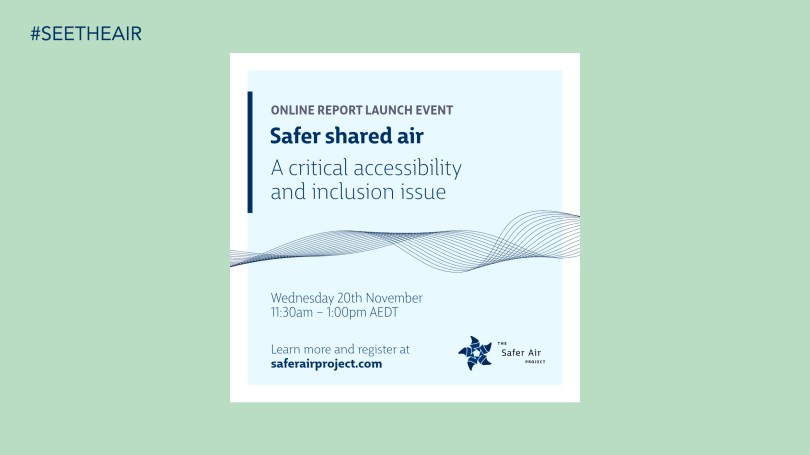
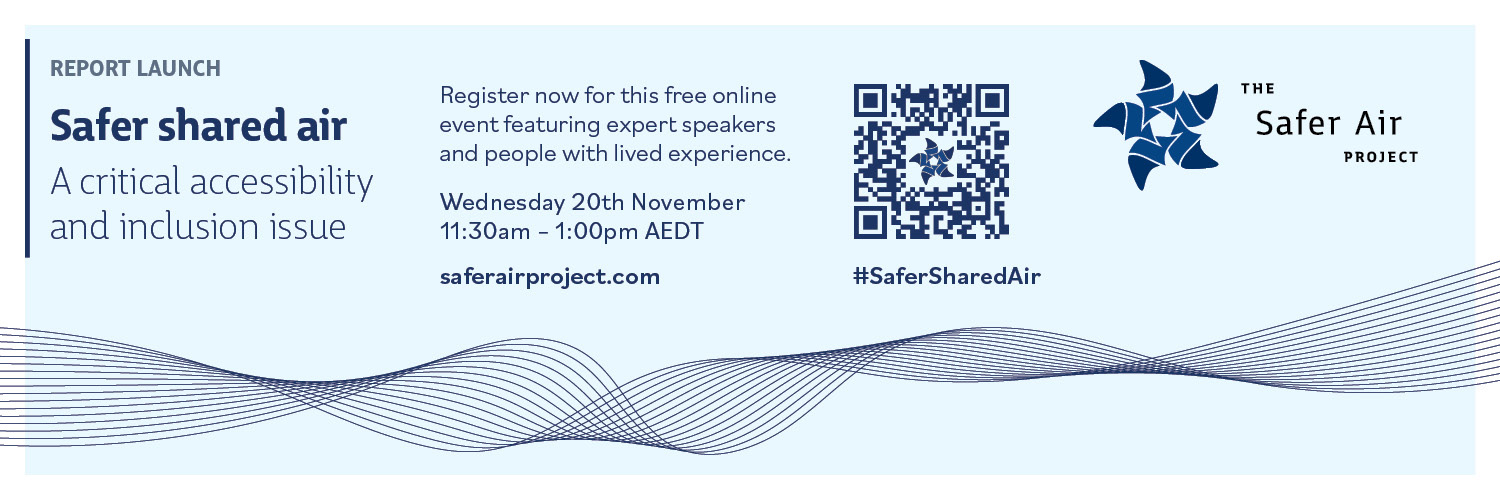
Breathe Easy Together: Register Now for The Safer Air Project Report Launch!

Creating a world where everyone can breathe safely indoors.

The pandemic has highlighted a critical truth: many diseases spread through the air we breathe. This makes clean indoor air essential for minimizing the risk of infection in our shared spaces, especially for those most vulnerable to airborne illnesses. Everyone deserves the right to access public spaces safely, and that right starts with clean air.

The Safer Air Project is excited to invite you to the online launch of our groundbreaking report, Safer Shared Air: A Critical Accessibility and Inclusion Issue. Join us to explore the importance of clean indoor air for public health and accessibility.

Here’s what you can expect:

  • Discover why safer shared air is a critical accessibility and inclusion issue.
  • Learn how we can work together to ensure healthier indoor air for everyone.
  • Gain insights from our report on the impact of poor indoor air quality and its connection to public health and inclusion.

This event is free and open to everyone!

Register now: https://www.saferairproject.com/

Together, we can create a world where everyone breathes safely indoors. Don’t miss this important discussion!

Indoorcare: Finally, Actionable Insights for Indoor Air Quality Management

For years, I’ve been preaching to companies the importance of offering curated insights into indoor air quality (IAQ). Building managers, while well-meaning, are often overwhelmed by raw data and technical measurements. They need actionable information, not complex reports.  Indoorcare is the first platform I’ve seen that truly empowers building managers to do their jobs effectively without becoming data analysts.

Effortless Management with AI-powered Insights

Indoorcare offers a user-friendly dashboard that goes beyond simply displaying air quality readings for PM2.5, CO2, CO, etc.  The magic lies in the AI-powered feedback. Users are presented with clear, easy-to-understand metrics like “Comfort Index,” “Cognitive Performance,” and even an “Allergy Risk Meter.” This allows managers to  immediately grasp the impact of air quality on building occupants.

Read More »

Particle Sizes, Infiltration, and the Indoor/Outdoor Ratio

Particle Sizes

Particle size plays a significant role in determining how particles behave indoors and their potential impact on human health. Fine particulate matter (PM2.5), with diameters of 2.5 micrometers or less, is a major concern due to its ability to penetrate deep into the respiratory system. An important subset of PM2.5 is ultrafine particles (UFPs), which have diameters less than 0.1 micrometers and are primarily emitted from combustion sources. These UFPs can even be transported to the brain via the olfactory nerve, potentially causing neurological effects. Particles in the 0.1 to 2.5 micrometer range can originate from indoor sources like soot or from the infiltration of outdoor particles. Coarse particles, larger than 2.5 micrometers, are mainly generated by mechanical processes like resuspending dust. These size distinctions are crucial because they influence a particle’s ability to penetrate indoors, remain airborne, and affect human health. For instance, the high surface area to mass ratio of UFPs makes them efficient at transporting harmful chemicals deep into the lungs. Understanding the sources and behavior of different particle sizes indoors is essential for developing effective strategies to mitigate their potential health risks.

Read More »

Recommended CO2 Levels for Optimal Building Performance

Carbon dioxide (CO2) concentration is a critical indicator of indoor air quality (IAQ) and plays a significant role in building performance. While CO2 itself may not be directly harmful at typical indoor levels, its concentration serves as a proxy for ventilation effectiveness and the potential buildup of other indoor air pollutants, including pathogens, that can negatively impact occupant health and cognitive function. This article examines the relationship between CO2 levels and building performance, drawing upon research findings and expert insights to recommend CO2 levels that promote a healthy and productive indoor environment.

Understanding the Role of CO2 in Indoor Environments

CO2 is a natural component of the air we breathe, but its levels can increase significantly in indoor spaces due to human respiration and other combustion processes (candles, cooking, combustion heating, etc). When ventilation is inadequate, CO2 from these sources can accumulate, leading to elevated concentrations.

Read More »

Carbon Monoxide: The Silent Killer Lurking Indoors

Carbon monoxide (CO), often referred to as the “silent killer,” is a colorless, odorless, and tasteless gas that can be deadly when inhaled in high concentrations. While it is often associated with outdoor air pollution, CO can also pose a significant risk within our homes and workplaces.

Furthermore, while carbon monoxide is often associated with acute poisoning, leading to immediate symptoms like headaches, dizziness, and nausea (hence we have CO alarms), it can also have long-term health consequences. Even exposure to low levels of CO over extended periods can cause damage to various organs and systems. Chronic CO exposure has been linked to chronic fatigue, memory problems, work difficulties, sleep disorders, dizziness, neurological disorders, paresthesia, recurrent infections, abdominal pain, and diarrhea 1, 2.

Read More »

Global Coalition Launches Initiative to Establish Universal Indoor Air Quality Standards: Global Open Air Quality Standards (GO AQS)

A diverse global coalition of scientists, air quality experts, and industry leaders has united to establish the Global Open Air Quality Standards (GO AQS), an unprecedented initiative aimed at creating universal indoor air quality (IAQ) standards. This groundbreaking effort seeks to ensure that everyone, regardless of location or socio-economic status, has access to the knowledge and tools needed to enhance their health and well-being through improved air quality.

GO AQS will serve as an authoritative and comprehensive resource for scientists, engineers, public health officials, businesses, and policymakers worldwide. By providing accessible, consistent and clear, standardised guidelines for IAQ, it empowers people to make informed decisions about their living and working environments, directly impacting health and productivity.

IAQ significantly affects our health, cognitive function, and overall productivity. Poor indoor air can exacerbate respiratory conditions, increase the risk of cardiovascular problems, and contribute to reduced work performance. Establishing universal air quality standards is a critical step in ensuring equitable access to clean and healthy air globally.

The coalition comprises experts from different fields including public health, environmental science, epidemiology, occupational health, engineering, and air quality research. Together, they are dedicated to developing GO AQS standards that are both scientifically robust and practical for implementation across diverse settings. These standards will address a wide range of indoor pollutants, including particulate matter (PM and PCN), carbon dioxide (CO2), carbon monoxide (CO), ozone (O3), and formaldehyde (CH2O), which are known to have significant adverse effects on human health and environment.

GO AQS aims to be a valuable tool for the public, private sector, and academia alike. Organisations that adopt these standards can enhance the health and well-being of their employees and customers, while simultaneously reducing their environmental footprint. This initiative also supports broader sustainability goals by promoting healthier indoor environments. 

While air quality interrogators and manufacturers are supportive of the overall goals of GO AQS, there are areas where the draft version requires further refinement to ensure its practical implementation. We remain committed to working collaboratively with all stakeholders to finalise a version of GO AQS that is both effective and feasible for the industry. Therefore the coalition is currently finalising the GO AQS standards and developing educational materials to facilitate their global implementation. The official launch is anticipated in December 2024, marking a significant milestone in the global effort to prioritise IAQ.

Read More »

Indoor Environmental Quality and Radiation Exposure

While we often think about indoor pollutants such as particle pollution (PM2.5), Carbon Dioxide (CO2), etc, the quality of the indoor environments (IEQ) can also have a significant impact on our health through various sources of radiation exposure within our homes and workplaces. Radiation is not commonly investigated nor monitored indoors.

Beyond the Usual Suspects:

Let’s explore some unexpected sources:

  • Frequent Flyers: Cosmic radiation exposure increases with altitude. While infrequent flights pose minimal risk, frequent flyers may experience slightly elevated radiation levels.
  • Ground Elements: Radioactive elements like uranium naturally occur in soil and rocks. Depending on the geology of your area, these elements can seep into basements or crawlspaces, releasing radon gas, a known human carcinogen. Radon forms from the breakdown of uranium, radium, and thorium, which are naturally present in rocks, soil, and water. As radon gas seeps into buildings through cracks and gaps in foundations, it can accumulate to dangerous levels.
  • Vintage Timekeepers: Those vintage watches with luminous dials might be harboring a radioactive secret. Radium or tritium, once used for illumination, can pose a health risk.
  • Colorful Contaminants: Certain ceramics and glassware use glazes containing radioactive elements for vibrant colors. While generally “safe” when intact, chipping or breaking these items can release radioactive particles.
  • Food: Bananas, spinach, oranges, beer, etc. all contain potassium K-40 which is a radioactive isotope that emits beta and gamma radiation. The dose of radioactivity they deliver is tiny and does not pose a health risk.
  • Nuclear Power Plants: Nuclear power plants are heavily regulated and emit very low levels of radiation during normal operation. While unlikely, a serious accident at a nuclear power plant could release dangerous amounts of radiation.
  • War Zones: Radiation exposure is a serious danger in a war zone if a nuclear weapon is detonated.
Read More »

Review: airCoda – Pocket CO2 Monitor

Looking for a way to monitor CO2 levels on the go? The airCoda pocket CO2 monitor might be your breath of fresh air. This compact device features a photoacoustic NDIR CO2 sensors, a technology known for its small size and accuracy in measuring CO2 concentrations in any environment.

Why the airCoda?

  • Pocket-Sized Portability: Unlike bulkier CO2 monitors, airCoda’s small size allows you to easily carry it anywhere. Whether you’re checking CO2 levels in your office, classroom, or even your car, airCoda gives you the freedom to monitor air quality wherever you go.
  • Sensor Accuracy: Thanks to the integrated sensor, you can trust airCoda to provide reliable CO2 readings. This is crucial for making informed decisions about ventilation and maintaining healthy air quality.
Read More »

Over-the-Range Hood Microwaves: Addressing Indoor Air Quality Concerns

Over-the-range hood microwaves offer the convenience of a combined microwave and “ventilation” system. However, a common misconception is that they effectively remove cooking fumes and pollutants from the kitchen. While they do have a fan system, it’s crucial to understand their limitations.

Recirculation vs. True Ventilation:

Unlike range hoods that vent exhaust outdoors, most over-the-range microwaves utilize a recirculation system. This means they draw in cooking fumes, grease, and moisture through a metallic mesh filter with holes bigger than a Swiss cheese, then release the “treated” air back into the kitchen.

Read More »