Vacuum Cleaners against PM2.5

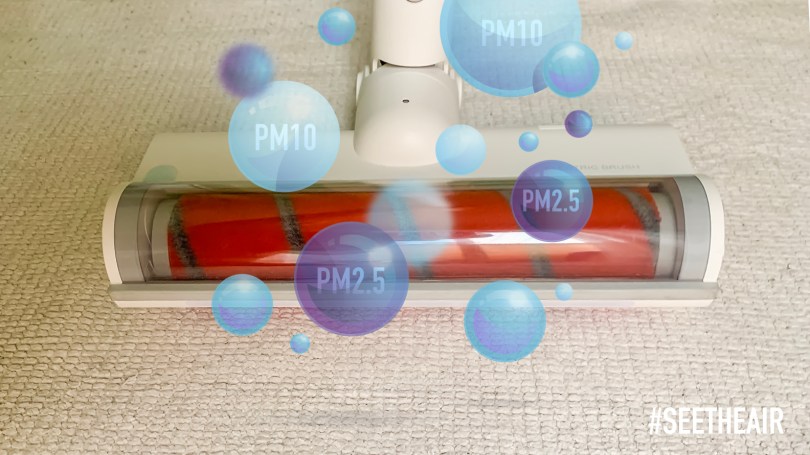
We all enjoy a clean and cosy house free from dust and pollutants. Unfortunately, sometimes we commit serious mistakes when it comes to the decisions we take and the ways we choose to clean it. One of the most common mistakes is using vacuum cleaners that don’t have a HEPA filter. We already know how dangerous are PM2.5 particles because they can penetrate deeply inside our bodies and affect our lungs, heart and even our brains.

Read More »

Review: Awair 2nd Edition

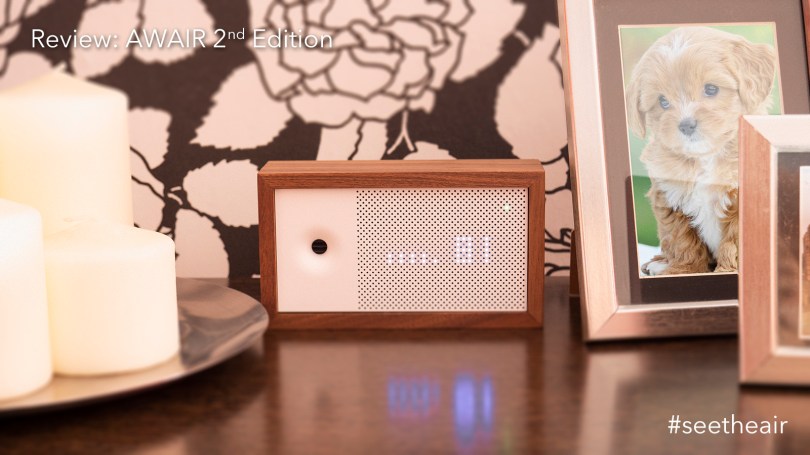
I love when companies manage to release a second generation of their original product. In this case, Awair released the new Awair 2nd Edition a few months ago.

They clearly have learned a lot and the adjustments they have done and offer with the new version are notable at least hardware-wise. Software-wise the tweaks are small in comparison with the old version but welcome. This can be a good thing because old users can enjoy similar features like the new ones.

Read More »

BRISE C200 PM2.5 Efficiency Tests

On the previous article, I presented a new air purifier with an A.I. Engine called BRISE C200. In general, the best way to prove the efficiency of an air purifier is by taking measurements with a respectable 3rd party AQ monitor while there is an air quality issue ongoing inside the room and that is what I did. I used the uRAd A3 Monitor for the measurements and the device was placed near the purifier.

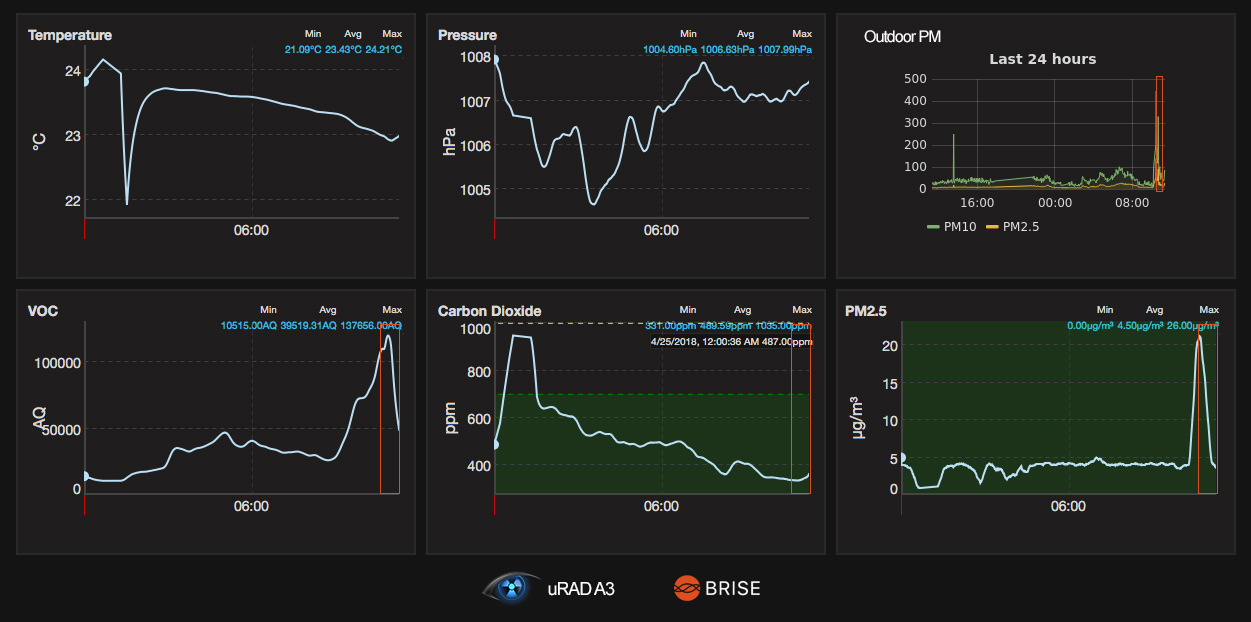
At first, I had set the purifier off on purpose because I didn’t want the A.I. engine to kick in automatically before I was able to register the event. When a PM2.5 spike was registered, as you can see on the picture below from 4μg/m3 to 26μg/m3, I turned on the purifier and the air quality inside the room immediately improved till it returned to the normal PM2.5 concentration and the purifier turned itself off automatically.

AQ-BRISEC200

In the picture below you can see the FC200 4-in-1 Combo filter after one month of usage. The carbon pre-filter has captured PM10 particles, hair, dust and even a little dead spider, which was caught by the purifier’s air flow when it was set on Turbo Mode. After that, we can see the blue anti-bacteria filter and under it the HEPA filter responsable for capturing all PM2.5 particles. Finally, the TiO2 will absorb harmful chemical vapors.

FILTERS C200 BRISE

I wanted to repeat the experiment with the BRISE C200 purifier and a different AQ Monitor in a different room and day, so with the help of the AirVisual AQM I set them up in my bedroom. This time it took 14 min into Turbo Mode to clean the air, the bedroom is a bit bigger. When the purifier achieved a concentration of ±1μg/m3, I turned it off and with the door closed the air inside the room was kept clean, but immediately after I opened the door the air quality was decreased. Below you can see the results.

airvisaul brise

Review: BRISE C200 Air Purifier

It was time to review an air purifier because it is a vital device for those who suffer from air pollution and allergies. The purifier that I am going to review is called BRISE C200. It was first launched in Taiwan in 2017, although the company’s headquarter is in the Netherlands with team members in Germany and Taiwan. I have been following this company since their first steps into the air quality market.

The reason I wanted to review this purifier first is because it is the first air purifier with artificial intelligence aka A.I. and because it combines two devices in one, an air quality monitor and a purifier, obviously.Read More »

Review: uRAD Monitor A3

Who says that everything is made in China or USA? Well, let me introduce you the uRAD Monitor A3 an Air Quality Monitor which is made in Romania, Europe since 2012. The design, firmware design, server software and big data database maintenance and development are all made there and amazingly enough even the unit that I have on my hands is made personally by the CEO Radu Motisan. As a result I am very proud to review it and talk about the cons and pros.

Features:

  • Temperature Sensor -40°C to +85°C / 40°F to 185°F
  • Humidity Sensor RT 0-100%
  • Air Pressure Sensor 300-1,100mbar
  • VOC Sensor 0 mg/m³ to 100 mg/m³ reducers – 10 mg/m³ oxidizers
  • PM2.5 Sensor 0 μg/m³ to 1000 μg/m³
  • Formaldehyde Sensor 0 ppm to 5 ppm
  • Carbon Dioxide Sensor 400 ppm to 5000 ppm
  • γ (gamma), x-rays Sensor 0.01μSv/h to 9999.99μSv/h
  • WiFi or LoraWAN or Ethernet or GSM
  • Built-in Speaker
  • LED Light

Read More »

DIY PM Monitor Take 2

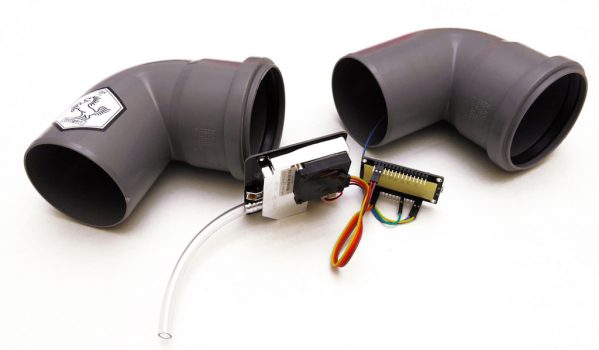
Do you remember this DIY Low cost DIY PM Monitor, there is a new and better version available.

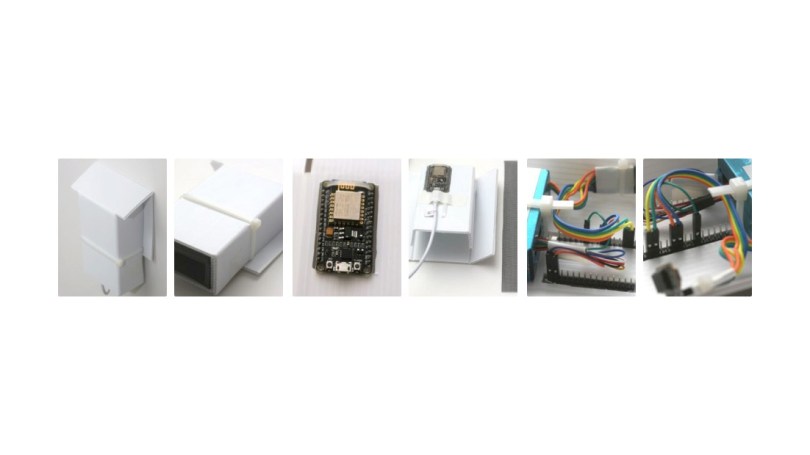
The new version offers a low cost housing and the software is more mature now. The software is open source, on github, and there are some pre-built images on their website.

A great new feature is the ability to store of a few days of data on the device which makes it more robust to internet outages and usable for periods away from wifi access, and it records every sample from the PMS5003 sensor which is more that one per second to better capture quick changes and better for mapping walking around.

You can find all the instructions on their website.

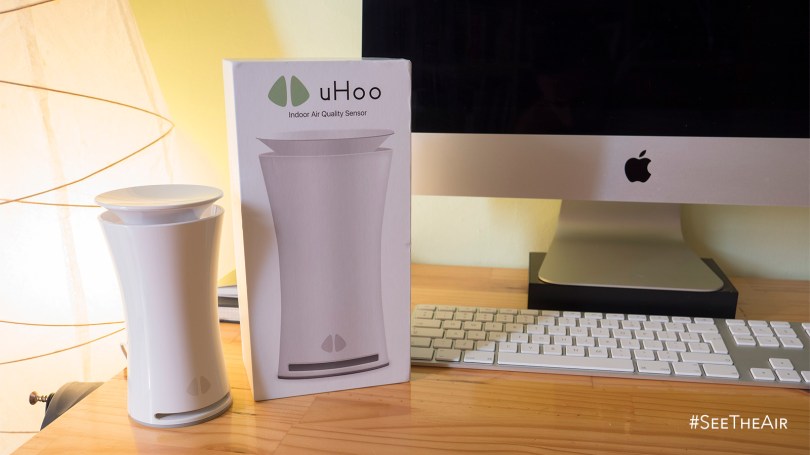
Review: uHoo AQI Monitor

Finally is here. After having an adventure with the postal service for +40 days the uHoo device found its way to my home. I want to thank uHoo for its persistence.

Let me start by saying that this is a very promising device because it features 9 separate Sensors for Air Quality monitoring and there isn’t any other device with so many sensors for indoor use. The company was founded in August 2014 and it took them two and a half years to develop uHoo.

Features:

  • RGB LED Light
  • Temperature Sensor -40°C to 85°C / 40°F to 185°F
  • Humidity Sensor RT 0-100%
  • Air Pressure Sensor 300-1,100mbar
  • Carbon Dioxide CO2 Sensor 400-10,000ppm
  • Carbon Monoxide CO Sensor 0-1000ppm
  • VOC Sensor 0-1,000ppb
  • PM2.5 Sensor 0-200ug/m³
  • Ozone O3 Sensor 0-1,000ppb
  • *Nitrogen Dioxide NO2 Sensor 0-1000ppb
  • Micro USB Power Input 5V DC
  • WiFi 802.11 b/g/n @ 2.4 GHz

Read More »

OK Lab Stuttgart – PM DIY Monitor

An Outdoor PM DIY Monitor

Do you think the current PM (Particulate Matter) monitors are too expansive or too risky to leave them outside? Do you need proofs for convincing your local authorities to take actions against air pollution?

Then it’s time to build your own personal outdoor PM DIY Monitor. It won’t cost you more than €32 and it can feed your community with valuable data about the air quality. Use that data to prove how bad is the air quality in your neighborhood or community.

Read More »

Air Quality Devices – Comparison 2017 Q2

More and new devices on the market. From wearables to home AQI monitors are here to assist people’s needs. Remember air pollution is everywhere.

comparison air 2017 Q2

  • Prices may vary during time.
  • Some Companies don’t specify on their data sheet if their devices are capable to measure PM2.5 or PM10 and they just mention the word dust.
  • Some other companies say: Our product goes beyond CO₂ by analyzing substances that directly affect your well-being by measuring VOCs. They aren’t clear if their devices have CO₂ sensor.
  • Some of the devices are AQI Monitors and Air Purifiers Combo. On this list you can only read the features as an AQI monitor.
  • The classification of the design between BadGood and Very Good is based on the materials (plastic, wood, glass and metal) that they use and the aesthetic on my personal opinion.

CO2 Candles Experiment

CO2 Candles Experiment

In this experiment I will demonstrate how fast Carbon Dioxide CO2 rises inside a room by lighting two small candles.

bedroomday1_0000 copy

I chose my study room as it can be easily isolated, plus I have got all the AQI monitors inside this room for the purpose of the experiment. The room is 7.3m². The experiment is easy, I lit 2 candles and closed the door and window of the room. Then I waiting with myself inside the room till the CO2 reached 1200ppm. Basically I logged the time when the CO2 was 430ppm and when it reached the 1200ppm with and without the candles.

With the candles the CO2 needed 35 minutes to reach the 1200ppm limit as you can see on the graph below and without any candle and with exactly the same conditions as before the CO2 needed 59 minutes to reach the upper limit.

Conclusion

You gain 25 minutes of more oxygen and less CO2 until the room reaches the 1200ppm limit which means more productive time and fewer headaches.

Gray Slate