Review: Laser Egg + CO2

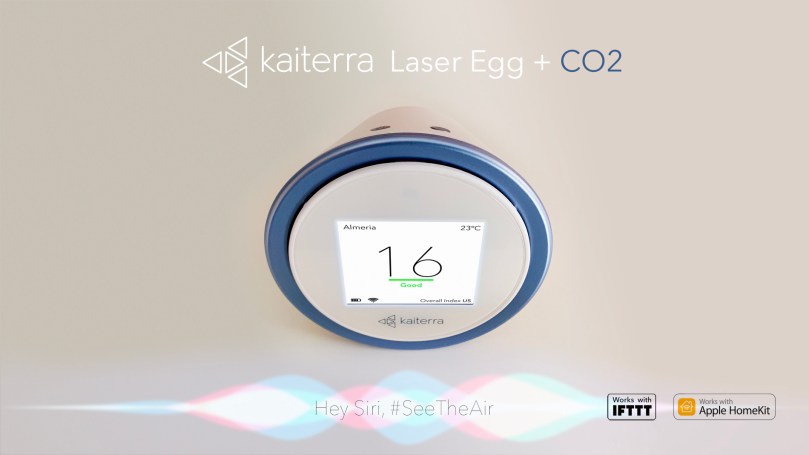
I was given the opportunity to review the brand new Laser Egg + CO2 monitor which is a new addition into the family of Kaiterra domestic air quality monitors.

This product is designed for those who work or stay lots of hours indoors and pay attention to how Carbon Dioxide CO2 can decrease our cognitive ability. The correlation between CO2 and productivity has been studied a lot for over 50 years by many academics.

Interesting facts, surprisingly, the design standard for CO2 levels in most buildings is 1000ppm but the recommended concentration is below 700ppm. In one of the studies, Harvard researchers have found significant negative impact at 930 ppm.

Read More »

Indoor IAQ Monitors 2019Q4

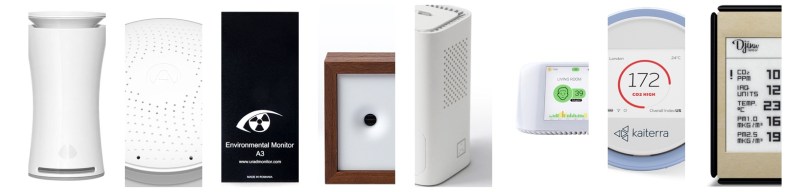
Here are all the available IAQ Monitors on the market 2019 Q4. There are so many devices out there but they all lack innovation and they all offer exactly the same technologies. Companies had better hear users feedback!

Read More »

Review: Airthings Wave Plus

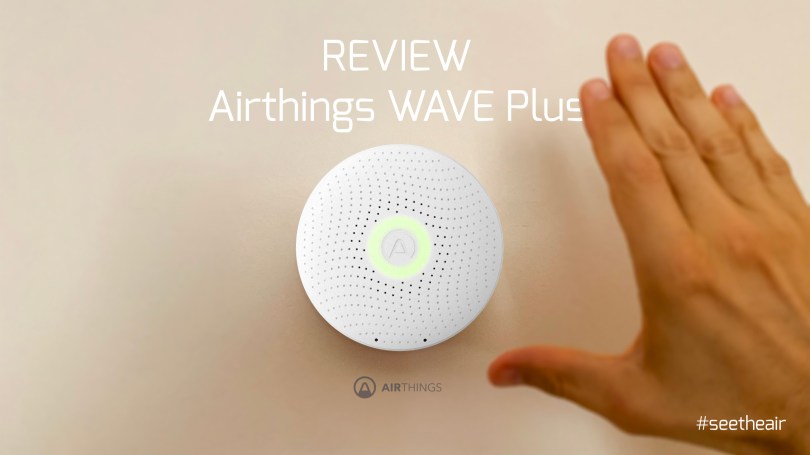
Finally,  an air quality monitor that focuses on Radon indoor pollution. Many of you have asked me to review an AQM with a radon sensor and the most famous of all the Airthings Wave which comes in various versions (Wave, Wave Plus). In this review, I am featuring the Airthings Wave Plus.

What is Radon?

For those who hear for the first time about Radon, it comes from the radioactive breakdown aka decay of naturally occurring Uranium found in most soils. As a gas in the soil, it enters buildings through small openings in the foundation. Since radon can easily be trapped inside buildings, indoor radon concentrations can increase to many times that of outdoor levels. When radon gas decays, it emits radioactive radiation in the form of an alpha particle/waves and Airthings Wave   can measure those alpha particles/waves. I don’t want to enter into details about the health effects on this post but Radon is found to be the second most common reason for lung cancer (after smoking).

Read More »

Next Air Quality Monitor

Each year around this time I write a post about what’s next in the industry of air quality.

I have been receiving a lot of emails and I have held meetings with many companies around the world that are interested to know what it has to be done in order to succeed.

Hear me out, there are a lot of companies right now and all of them are trying to do the same thing, to build an AQ Monitor that already exists. Customers are constantly telling us what they want, you don’t listen to them, but I do.

Read More »

Review: Djinn Sensor

The ingenuity and the inventiveness led DJINN Sensor — a Belarus company — to build an Air Quality monitor a bit different from the rest in the market.

Software-wise and hardware-wise the device offers some engaging features like solar panel case in order to harvest energy from the Sun and Productivity Current and Index analytics, to name a few. Let’s take a closer look at the AQ Monitor.

Read More »

Smoggie Installation Guide + Thank you

The Call for Volunteers was a great success and I had the chance to learn from you a little more about the problems of air pollution around the globe and the situation each one of you faces. From Canada, USA, Mexico, Australia, New Zealand, India, Romania, Italia, France, Belgium, Greece, Denmark, UK, Finland, Serbia, Spain, Ireland and many many other places. It wasn’t an easy task to select the 10 volunteers as all of you gave me good reasons. I want to THANK YOU all, it really means a lot your offer to raise awareness on such an important problem.

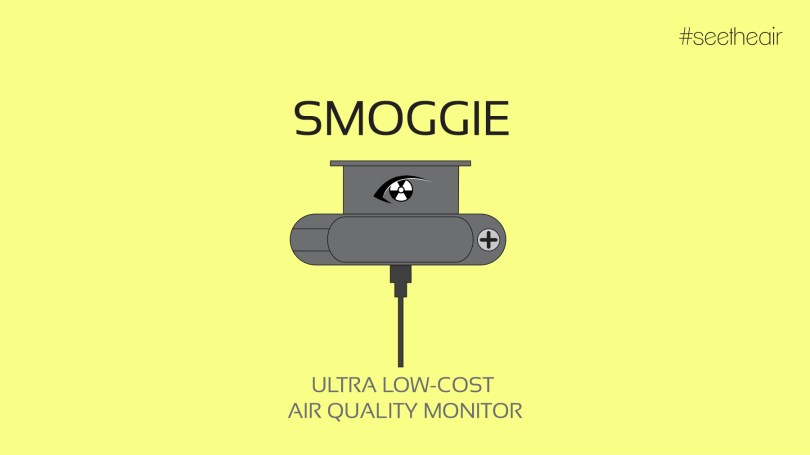
I have prepared a quick guide on how to install a SMOGGIE on an outdoor wall in 9 easy steps with images. The SMOGGIE is rainproof for this reason you just need to install them with the opening facing down.Read More »

In-Depth: Atmotube Pro

It will please some of you to know that I am going to compare Atmotube Pro with other Particulate Matter sensors and monitors. First with an outdoor monitor and in this case the Luftdaten DIY and second the AirVisual which is more of an indoor monitor.

Before I begin with the comparisons I want to dive a bit deeper and tell you that apart from exporting the .csv from the app directly, you can also access Atmotube’s .csv files (in case you have an iPhone) from the File Sharing service iTunes provides when you connect your phone with your computer (macOS & Win). This way you have more control over which days you upload to your computer.

Read More »

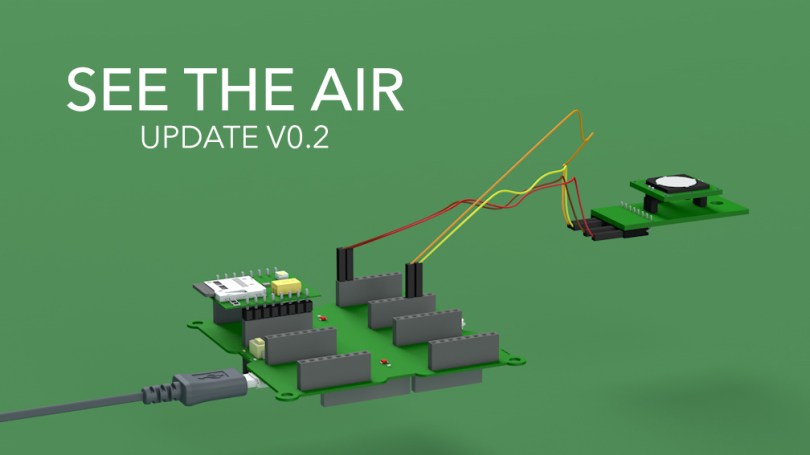
See The Air AQM v0.2 – Update

A new update for the DIY Air Quality Monitor is available with some cool new features. The new version v0.2 has the following features.

  1. Split up files
  2. New file structure
  3. Median Average

Read More »

See The Air AQM v0.1 – NO2 Analysis

In my previous post I presented the version 0.1 of my DIY Air Quality Monitor which uses a Nitrogen Dioxide sensor. In this post I am going to analyse the Nitrogen Dioxide NO2 sensor which is made by Spec-Sensors DGS-NO2 968-043 .

Calibrating your sensor.

In most cases the sensor isn’t calibrated which means that we have to set a zero point in order to get more accurate measurements. The company can calibrate it for you in a special chamber but you have to pay extra. In order to calibrate it on your own you have to be in a clean environment – without the presence of NO2 or NO or O3 – and then follow the instructions below which I have taken from the datasheet.Read More »

SeeTheAir AQ Monitor v0.1

Have you ever been in a situation where you wish you had had a device tailored to your needs? Over the years I have reviewed various Air Quality Monitors but each time they lack something which will make them unique to me. Don’t get me wrong each device has its features and characteristics, some of them are amazing and some of them not very useful. As a result, I decided to build my DIY AQM. I couldn’t have done it without Electronza and Teodor Costachioiu help with coding, he is a brilliant coder/engineer. I absolutely recommend you to check his blog you will find a lot of interesting projects.

Read More »