Launching the Air Quality Monitoring Market Matrix (GO AQM3)

This article was originally published by GO AQS and the original link is posted here.

At GO AQS, we receive continuous requests from facility managers, enterprise clients, and organizations seeking impartial advice on the best indoor, outdoor, portable, wearable, handheld, and hybrid air quality monitors for their specific projects.

To ensure complete fairness, transparency, and neutrality among our manufacturing partners, we are compiling the Global Open Air Quality Monitoring Market Matrix (GO AQM3). This tool will serve as an objective evaluation guide provided directly to active buyers looking for hardware recommendations.

Why Participate?

  • Direct Market Visibility: Present your products directly to qualified buyers actively searching for air quality solutions.
  • Fair & Standardized Platform: Equal representation for all products through standardized assessment criteria.
  • Accurate Representation: Ensure your latest specifications, certifications, and target applications are represented accurately—straight from the source.

How to Feature Your Products

To ensure your latest hardware models and features are included, we ask all monitor manufacturers to complete our survey only for products that are available in the market. We only accept commercially available hardware (B2B, B2C, or B2G), we will not accept crowdfunding campaigns, unreleased prototypes, or mockup future products.

Complete the Manufacturer Survey Here

About the Logo

Building on the classic protective shield of the original GO AQS design, the new GO AQM3 logo visually encapsulates the three core pillars of modern environmental monitoring. Within the shield’s outline sit three integrated elements representing the instrument’s key capabilities: precision sensing for pollutant measurement, connectivity for data transmission, and a central processing unit (chip) that intelligently manages data flow and monitor operations. Together, these icons highlight a complete, end-to-end monitoring solution.

Review: Atmotube PRO2 – From Consumer Gadget to Citizen Science Instrument

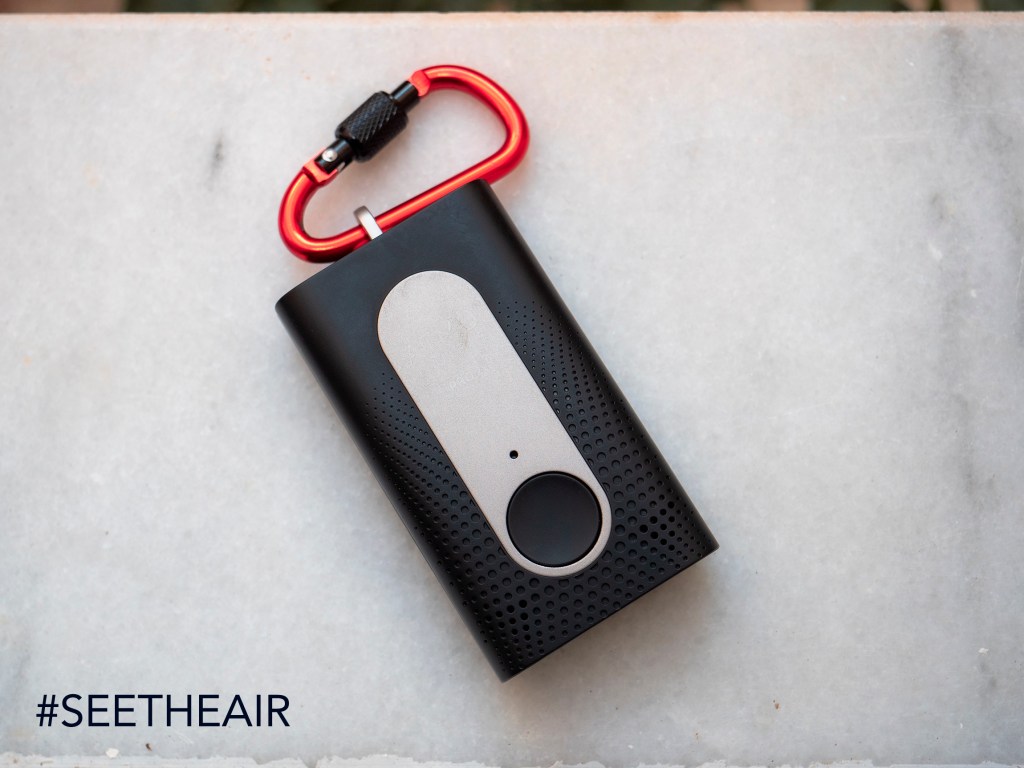
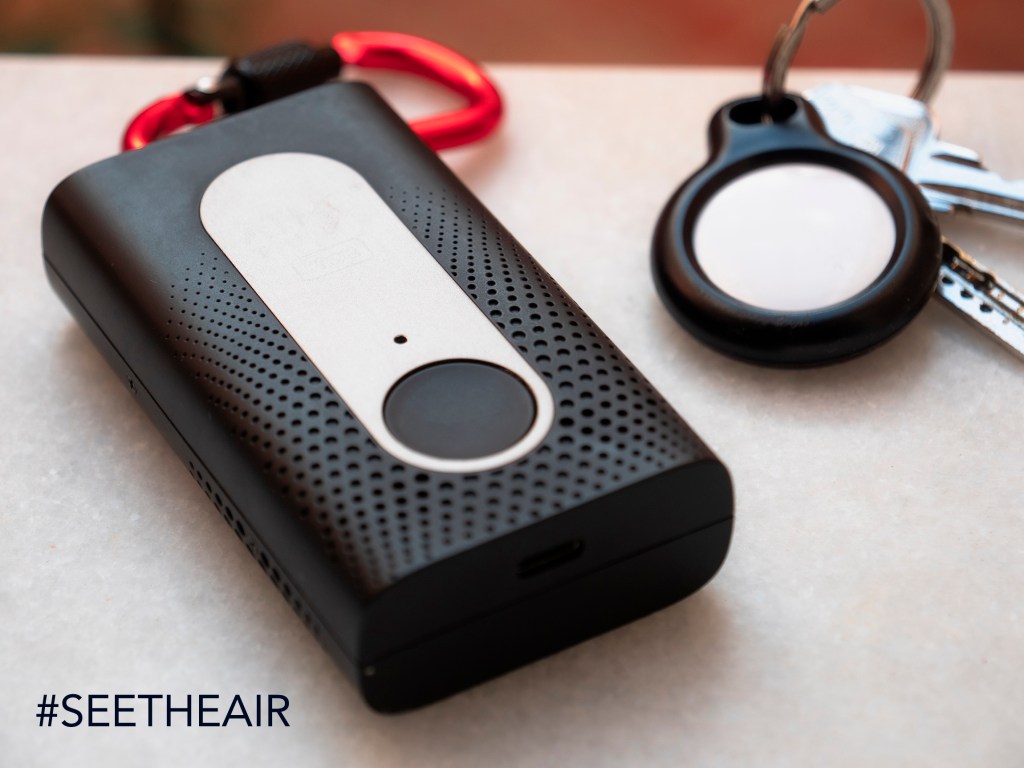
The Atmotube PRO2 marks a significant evolution in the world of personal air quality monitors (PAQMs). While it retains the rugged, familiar aesthetic of the original Atmotube PRO, the internal upgrades transform it from a consumer gadget into a serious scientific tool. Having put this device through a rigorous “field test”, it is clear that ATMO has listened to the research community to solve the most nagging pain points of the first generation.

Technical Specifications: A Scientist’s Toolkit

Here is the breakdown of the sensor suite:

  • PM sensor for PM1, PM2.5, PM10, and PCN0.5 (Sensirion SPS30)
  • NOx and TVOC sensor (Sensirion SGP41)
  • Temperature, Humidity (Sensirion SHT40-AD1B)
  • Air Pressure (Infineon DPS310)
  • CO2 sensor (Sensirion STCC4)
  • Built-in GPS (Allystar TAU1113) and Accelerometer (MiraMEMS da213B)
  • USB-C data access Sync history data with multiple devices
  • Memory size 16MB
  • Battery Li-Po 2300 mAh
  • Bluetooth 5.0
  • Weight: 106 g (3.7 oz)
  • Dimensions (H × W × D): 86 x 50 x 22 mm (3.4 x 2 x 0.9 in)

Something important to keep in mind as I found evidence that the device can measure PCN0.5 particle bin. If in the future the Atmotube PRO2 provides a precise particle count for the submicron fraction, which aligning with Global Open Air Quality Standards (GO AQS) recommendations to move beyond standard PM2.5 monitoring, this is crucial because traditional mass concentration (μg/m3) often fails to capture the significant health impacts of these tiny submicron particles.

Read More »

Review: AirGradient Open Air

Having had the opportunity to get the AirGradient Open Air (Model O-1PST) at the ASIC 2025 conference in Thailand, complete with its unique engraving, I’ve spent some time with this device, and it’s clear that AirGradient is pushing the boundaries of accessible and reliable outdoor air quality monitoring. This device presents a compelling alternative to existing solutions, particularly for those seeking transparency and robust performance.

Technical Specifications O-1PST

  • WiFi 2.4GHz IEEE 802.11 b/g/n-compliant
  • Bluetooth LE: Bluetooth 5, Bluetooth mesh
  • Status LED
  • Plantower PMS5003T for PM2.5 + ENS210 for T/RH
  • SenseAir S8/S88 CO2 NDIR Sensor
  • Sensirion SGP41 TVOC/NOX Module
  • Enclosure: ASA Plastic, UV Resistant and Weather Proof
  • Mounting Options: Wall or pole mounting options
  • 4m USB-C to USB-A Cable
  • USB-C Power Connector 2A/5V
  • Certifications: CE, RoHS, REACH, FCC

Sensor Selection: A Thoughtful Approach

The Open Air features a well-considered suite of sensors designed for accurate and insightful data. For PM2.5 measurements, it utilizes the Plantower PMS5003T, a sensor known for its reliability and found in other popular monitors like the PurpleAir (though it’s important to note the PMS5003T is a similar but not identical variant).

Read More »

aranet: Comprehensive Environmental Monitoring for a Healthier Home

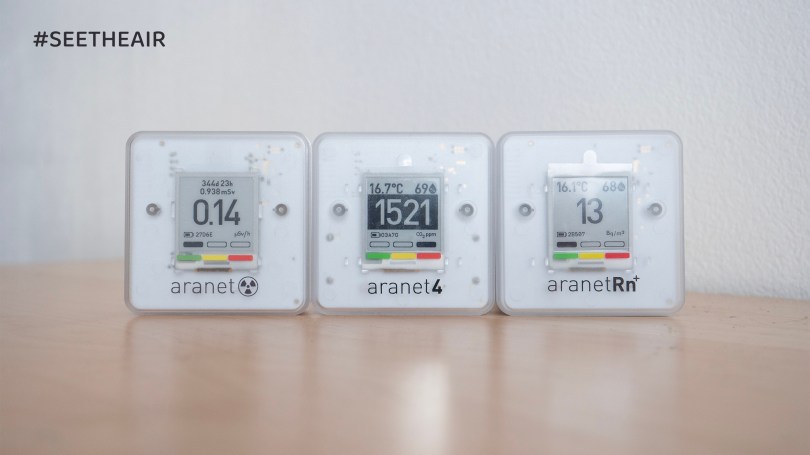
In an era where indoor air quality and environmental safety are of a high importance, aranet has emerged as one of the leaders in providing reliable and intuitive monitoring solutions. See The Air has thoroughly reviewed several of aranet’s innovative products, each designed to empower individuals with crucial insights into their living spaces. From carbon dioxide levels to radon gas and even radiation, aranet offers peace of mind through precise and accessible data.

Most aranet monitors stand out by providing a holistic view of your environment, often including temperature, relative humidity, and atmospheric pressure alongside their primary measurements. This multi-parameter approach helps users understand the interplay of various factors affecting their indoor comfort and health.

Read More »

Key Insights from ASIC 2025 in Thailand: Bridging the Indoor-Outdoor Divide

The recent Air Sensors International Conference (ASIC) 2025, held in the vibrant backdrop of Thailand, offered a profound opportunity to delve into the evolving landscape of air quality monitoring. As an attendee, several key themes emerged that highlight both the progress made and the remaining challenges in our quest to understand the air we breathe.

The Indoor-Outdoor Air Quality Discrepancy

One striking observation from the conference was the apparent disparity in research emphasis between indoor and outdoor air quality monitoring. While outdoor environments have benefited immensely from the widespread adoption and scrutiny of low-cost air quality monitors, indoor spaces appear to lag in comparison. The primary reason for this imbalance lies in the availability of robust reference instrumentation. Governments worldwide have invested in publicly air quality stations equipped with reference-grade instruments, providing invaluable benchmarks for normalization and validating low-cost sensors in a variety of outdoor conditions. This has not only accelerated the development of accurate low-cost monitors but also fostered the creation of sophisticated correction algorithms.

Read More »

Moving from Tech-Focused Air Quality Monitoring to Societal-Centric Digital Twin Solutions

Modern cities are increasingly equipped with a wealth of data from Internet-of-Things (IoT) devices, including those monitoring air quality using low-cost sensors. The concept of urban digital twins, virtual representations of urban environments, has emerged as a promising tool to interpret this data and understand the impact of interventions. These digital twins hold the potential to move beyond mere monitoring towards real-time, automatic solutions to environmental challenges like air pollution. However, current efforts often prioritize technological development, sometimes at the expense of addressing fundamental societal needs and achieving seamless integration with digital twin technologies.

The deployment of low-cost sensor networks has indeed revolutionized air quality monitoring by providing data at much higher spatial & temporal resolutions than traditional regulatory sites. This densification of observations, facilitated by IoT, offers a greater understanding of pollution sources and dispersion. Smart city initiatives further integrate various data streams onto online platforms, theoretically enabling real-time decision-making. However, the development of fully integrated smart city infrastructure remains rare, with many applications focusing on single aspects like air quality and often struggling to address community needs, being more driven by technological deployment. Moreover, a significant number of projects do not progress beyond the demonstration stage due to funding limitations, highlighting a potential disconnect between technological advancement and sustained societal benefit.

Read More »

GO AQS and ASIC 2025 on Technology & Air Quality (Join Us in Thailand!)

For too long, the focus on air quality has primarily been on the outdoor environment. But the truth is, we spend the vast majority of our time indoors – in our homes, offices, and schools. That’s why the arrival of the Global Open Air Quality Standards (GO AQS) marks a monumental shift. This initiative is the first of its kind to establish a set of limits specifically for indoor air quality, with the primary goal of safeguarding human health. We’re excited to announce that GO AQS will be presenting our work at the ASIC 2025 conference in Thailand, and we invite tech companies and air quality experts to join us there to learn more.

GO AQS recognizes that the air we breathe within our buildings has a direct and significant impact on our well-being, productivity, and even our long-term health. But how can buildings effectively monitor and manage their indoor air to meet these new standards? The answer lies in the advancements of air quality technology, particularly the rise of low-cost monitors (LCMs).

Historically, the gold standard for air quality measurement has been reference-grade instruments. While incredibly accurate, these devices come with a hefty price tag, making widespread deployment within buildings economically prohibitive. Furthermore, they are often bulky, noisy, and energy-intensive, rendering them impractical for continuous monitoring in occupied spaces like bedrooms, offices, or classrooms. Crucially, these sophisticated instruments are typically not designed to integrate with building automation systems (BAS), hindering real-time control and response to air quality issues.

Read More »

Air Quality Data & Ownership

In an age where information is power, the question of who owns the data generated by air quality monitors and sensors has become increasingly important. This is especially true for air quality monitors that provide crucial insights into the air we breathe. While these devices offer valuable information, users should be aware of potential issues related to data ownership and accessibility.   

The Risks of Changing Terms and Closed Systems

In some cases, companies have sold air quality monitors with “unlimited” data storage, only to later change their terms of service and require users to pay for continued access to their own data. This bait-and-switch tactic leaves consumers feeling betrayed and exploited, as they are forced to pay for something they thought they already owned.

Read More »

Indoorcare: Finally, Actionable Insights for Indoor Air Quality Management

For years, I’ve been preaching to companies the importance of offering curated insights into indoor air quality (IAQ). Building managers, while well-meaning, are often overwhelmed by raw data and technical measurements. They need actionable information, not complex reports.  Indoorcare is the first platform I’ve seen that truly empowers building managers to do their jobs effectively without becoming data analysts.

Effortless Management with AI-powered Insights

Indoorcare offers a user-friendly dashboard that goes beyond simply displaying air quality readings for PM2.5, CO2, CO, etc.  The magic lies in the AI-powered feedback. Users are presented with clear, easy-to-understand metrics like “Comfort Index,” “Cognitive Performance,” and even an “Allergy Risk Meter.” This allows managers to  immediately grasp the impact of air quality on building occupants.

Read More »

Funding Alert: Air Pollution Research – EU, UK, US, Thailand, Senegal, and Panama

Originally posted on LinkedIn

The European Commission is offering up to €73 million in funding for research projects aimed at improving air quality under its LIFE program. Successful projects can receive between €2 million and €10 million to support initiatives that restore and enhance the environment. Applications are open until September 19th, 2024.

Link: https://ec.europa.eu/info/funding-tenders/opportunities/portal/screen/opportunities/topic-details/life-2024-sap-env-environment

The European Commission’s Climate, Infrastructure and Environment Executive Agency has issued a second Life call with a focus on air quality and pollution. Projects can secure between €10 million and €30 million in funding. The deadline for applications is September 5. 2024.

Link: https://cinea.ec.europa.eu/funding-opportunities/calls-proposals/strategic-integrated-projects-sip-environment_en

Horizon Europe is launching a call for proposals on September 17 to fund projects developing zero-pollution solutions for cities and regions. Successful projects will share a €20 million pot. Applications close on February 11th, 2025.

Link: https://ec.europa.eu/info/funding-tenders/opportunities/portal/screen/opportunities/topic-details/horizon-miss-2024-cit-01-02

Read More »