Launching the Air Quality Monitoring Market Matrix (GO AQM3)

This article was originally published by GO AQS and the original link is posted here.

At GO AQS, we receive continuous requests from facility managers, enterprise clients, and organizations seeking impartial advice on the best indoor, outdoor, portable, wearable, handheld, and hybrid air quality monitors for their specific projects.

To ensure complete fairness, transparency, and neutrality among our manufacturing partners, we are compiling the Global Open Air Quality Monitoring Market Matrix (GO AQM3). This tool will serve as an objective evaluation guide provided directly to active buyers looking for hardware recommendations.

Why Participate?

  • Direct Market Visibility: Present your products directly to qualified buyers actively searching for air quality solutions.
  • Fair & Standardized Platform: Equal representation for all products through standardized assessment criteria.
  • Accurate Representation: Ensure your latest specifications, certifications, and target applications are represented accurately—straight from the source.

How to Feature Your Products

To ensure your latest hardware models and features are included, we ask all monitor manufacturers to complete our survey only for products that are available in the market. We only accept commercially available hardware (B2B, B2C, or B2G), we will not accept crowdfunding campaigns, unreleased prototypes, or mockup future products.

Complete the Manufacturer Survey Here

About the Logo

Building on the classic protective shield of the original GO AQS design, the new GO AQM3 logo visually encapsulates the three core pillars of modern environmental monitoring. Within the shield’s outline sit three integrated elements representing the instrument’s key capabilities: precision sensing for pollutant measurement, connectivity for data transmission, and a central processing unit (chip) that intelligently manages data flow and monitor operations. Together, these icons highlight a complete, end-to-end monitoring solution.

The Silent Lifeline of IoT: Why Compression is the Future of Air Quality Monitoring

For years, the Internet of Things (IoT) conversation has been dominated by sensors, cloud platforms, and the flashier world of AI analytics. While AI remains the current “buzzword,” the reality is that millions of IoT devices are already quietly working in the background, providing the essential sensor data that powers our modern world. However, as these deployments mature and scale, a critical bottleneck has emerged: the cost and physical limits of data transmission.

In my experience with Air Quality Monitoring (AQM) solutions, I’ve seen this play out repeatedly. Projects often aim to transmit high-frequency, continuous air quality measurements over long distances, only to hit a wall. Whether it’s the strict payload size limits of LoRaWAN or the spiraling costs of high-frequency transmissions over LTE/NB-IoT, the “raw data” approach is no longer sustainable.

The Problem with “Raw” Transmission

Most IoT data, especially from air quality sensors, is highly structured and repetitive. Devices often transmit variations of the same environmental measurements over and over. Sending this information raw ignores a simple reality: transmission is expensive, not just in terms of data plans, but in battery life, maintenance, and long-term operational costs.

Read More »

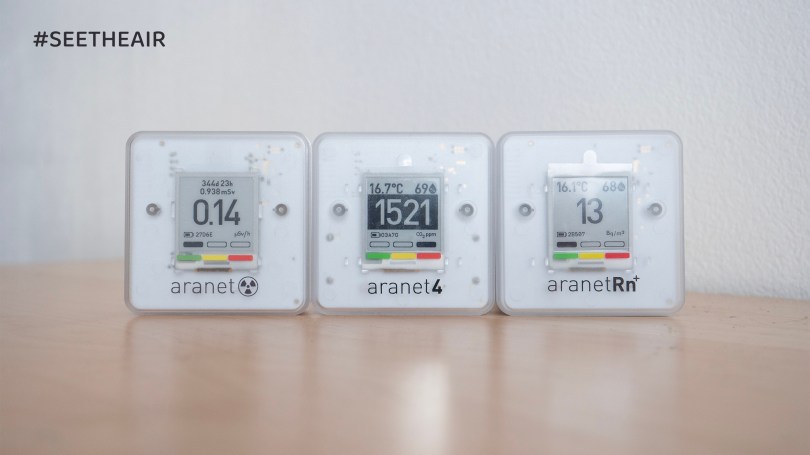
aranet: Comprehensive Environmental Monitoring for a Healthier Home

In an era where indoor air quality and environmental safety are of a high importance, aranet has emerged as one of the leaders in providing reliable and intuitive monitoring solutions. See The Air has thoroughly reviewed several of aranet’s innovative products, each designed to empower individuals with crucial insights into their living spaces. From carbon dioxide levels to radon gas and even radiation, aranet offers peace of mind through precise and accessible data.

Most aranet monitors stand out by providing a holistic view of your environment, often including temperature, relative humidity, and atmospheric pressure alongside their primary measurements. This multi-parameter approach helps users understand the interplay of various factors affecting their indoor comfort and health.

Read More »

Review: M5Stack K131 AirQ – All in One Portable Air Quality Monitor

The M5Stack K131 AirQ is an all-in-one air quality monitor designed for easy and comprehensive monitoring of your environment. It is a portable air quality monitor and an ideal companion for those who want to track their exposure to environmental pollutants.

Characteristics

Pros:

  • Multi-sensor: It goes beyond basic temperature and humidity readings, offering detailed readings on PM1.0,PM2.5, PM4, PM10 particles, VOCs, NO2, and CO2 concentration. This gives you a holistic view of your air quality.
  • E-ink display: The easy-to-read e-ink display provides clear visuals of the monitored metrics, even in low light conditions. Even in a power outage, the last screen will still be visible.
  • Versatile mounting: LEGO mounting holes, magnets, and detachable hanging ears offer various installation options for different environments.
Read More »

Review: AIR-1 Air Quality For Home Assistant

Breathe Easy and Tinker Freely: A Review of the AIR-1 Air Quality Sensor for Home Assistant

For the privacy-conscious and perfectionist homeowners who crave customization, the AIR-1 Air Quality Sensor by Apollo Automation is a breath of fresh air (literally). This sensor goes beyond simply monitoring air quality; it empowers you to take control of your indoor environment.

A little background about Home Assistant: Home Assistant is an open-source home automation that puts local control and privacy first. Powered by a worldwide community of DIY enthusiasts. Think of it as Apple’s HomeKit with the ability for endless customizations.

Specifications

  • Particulate Sensor
  • CO2 Photoacoustic NDIR Sensor (Optional)
  • Gas Sensor MOS Package (CO, NO2, C2H5OH, H2, NH3, and CH4) (Optional)
  • TVOC Sensor
  • Temperature and Humidity Sensor
  • Barometric Pressure
  • 3 RGB LEDs
  • USB-C
  • WiFi 2.4 GHz
  • Bluetooth 5

All the specifications and sensor manufactures are listed here.

Built for the DIY Enthusiast

Unlike many smart home devices, the AIR-1 doesn’t lock you into a proprietary ecosystem. It leverages the open-source power of Home Assistant, giving you complete control over your data and how it’s used. This is perfect for those who want to tinker and integrate the AIR-1 into their existing smart home setup.

Read More »

From Boom to Bust: The Great IoT Air Quality Recession

The once booming Internet of Things (IoT) air quality monitoring market is facing a harsh reality check. Fueled by a surge in AI startups attracting investments and a subsequent saturation of low-cost air quality monitors, the industry is experiencing a period of upheaval. This downturn, dubbed “The Great IoT Air Quality Recession,” is forcing companies to adapt or face extinction. I see many high-profile executives leaving previously thought innovative startups in the realm of air quality in search of a more “stable” future.

A Wave of Investment and Sensor Saturation

AI startups like ChatGTP and similar, promising to leverage the power of machine learning to generate content or analyze data, became investor darlings. This new influx of cash is fueling the decline of IoT low-cost air quality solutions.

After the COVID-19 pandemic, the market quickly became saturated with low-cost monitors that promised that will fix indoor and outdoor environments. Buildings were filled with cheap monitors, but actionable insights remained scarce. The promised AI-powered analysis, in many cases, failed to materialize. Consumers were left with a plethora of data points with no clear understanding of what it all meant or what to do.

Read More »

Review: Canāree by Piera Systems

This is a quick review of the Canāree. An indoor air quality monitor that you can carry around thanks to its compact size.

Specifications

  • 7-Bin Optical Particle Counter Sensor (PM1.0/PM2.5/PM10)
  • Volatile Organic Compounds (VOC)
  • Temperature Sensor
  • Humidity Sensor
  • Air Pressure Sensor
  • USB-A
  • WiFi Module
  • RGB LED AQ Indicator
Read More »

Air Quality Monitors – Comparison List 2022 Q2

The famous list with all the available indoor air quality monitors is finally updated. In this version there are two tabs. Air quality monitors for consumers (B2C) and for businesses (B2B). As always, I stay away from knockoffs and cheap products. An air quality monitor needs to function properly for 5 to 10 years depending the sensors − gas sensors tend to have a shorter lifespan.

Subscribe to download the Excel Spreadsheet.

If you want to download the Excel Spreadsheet with all the monitors you need to subscribe first. Thank you for your support.

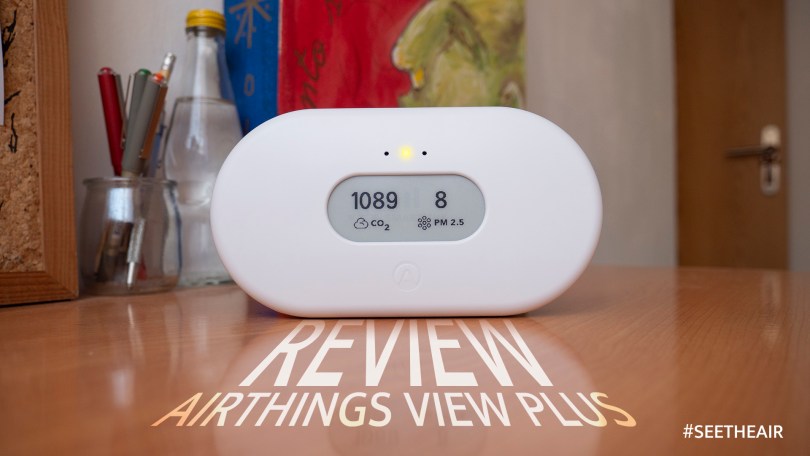
Review: View Plus by Airthings

View Plus is the flagship air quality monitor from Airthings which was designed to address as many indoor parameters as possible and it complies with Green Building Certification.

The philosophy behind Airthings air quality monitors is simple. They try to make B2C and B2B clients’ life easy. One clear example is that all monitors, including the View Plus, work on simple AA batteries in order to avoid installation fees (from construction workers) and ugly cables running all over the walls.

Specifications

  • Particulate Matter (PM2.5) Laser OPC Sensor 0-500 μg/m3
  • Carbon Dioxide (CO2) NDIR Sensor 400–5000 ppm
  • Volatile Organic Compound (VOCs) Metal-oxide Sensor 0-10000 ppb
  • Temperature Sensor
  • Humidity Sensor
  • Air Pressure Sensor 500-1100 mBar
  • Light Sensor
  • Hand Gesture Sensor
  • Noise Sensor 35 – 120 dBA SPL
  • E-Ink 2.9″
  • RGB LED Indicator
  • 6 AA batteries or USB-C
  • Mesh SmartLink and Bluetooth LE
Read More »

Review: Senstate Urban Air Quality Station

I was given the chance to review an air quality monitor from a European company that is located in one of the most contaminated countries with the highest concentrations of particulate matter − the notorious pollutant which causes premature deaths and many illnesses.

Each year during the cold winter months, Bulgaria has the highest PM2.5 concentrations of all EU-28 member states in urban areas (I have the chance to experience it in person in Sofia). The reason is wood and coal burning. Senstate Technologies SC is a Bulgarian company with experience in the field of environmental issues.

The Senstate Urban Air Quality Station is a versatile and configurable air quality monitor with cutting-edge technologies on board, I will give you more information about it in a hot minute.

Read More »