(Scroll down for the Spanish version/Desplácese hacia abajo para la versión en español)
Two years ago I reviewed the BRISE C200 and I have been using it everyday but I had never thought before that the UV sterilization process will come so handy. It provides an extra layer of protection in a house or in small office especially during this covid-19 pandemic.
I don’t know about your experience during the lockdown, but mine was quite frustrating when I had to go out for grocery shopping and return home or even when I ventilate my house. A lot of things had been written about the SARS–CoV–2 virus, like that it could survive on clothes, on surfaces (keys, phones, money, etc) and that it can be an airborne pathogen.
Airborne means that a virus is transmitted between people through respiratory droplets and contact routes.Read More »
Airthings is a pioneer company as they have developed an in-house sensor for Radon detection but their expertise doesn’t stop there. They have expanded their product-line with domestic and business solutions with one thing in mind, how to enhance indoor life.
Since the beginning of the pandemic, I have received countless messages from people all over the world who have found themselves stuck inside for a long time and asking me to help them improve their indoor environment. Domestic users but also businesses that want to go a step further and offer a more productive environment for their employees after the lockdown.
I have already reviewed the Airthings Wave Plus and today I would like to review how each product offers a solution inside the house.
The Wave Plus is equipped with a Temperature/Humidity, VOC, Radon, and more importantly a CO2 sensor which is the first sensors to have in mind when you think teenagers. Teens tend to spend a lot of time inside their room, listening to music, studying, doing homework, watching countless videos on TikTok and Youtube, and messaging with other teens at the same time via Instagram. Teens don’t worry about air quality but I bet you all have experienced the musty smell every time you open their room door. Part of the smell is a crazy high CO2 concentration combined with VOCs.Read More »
In September 2019, I reviewed a great air quality monitor called Djinn. One of the unique features of this device is the algorithms that are running in its core. The team of Djinn was able to move even further their technology by designing a respiratory virus risk among others analytics on their dashboard, which is very handy during the covid-19 pandemic.
The team took part in the “A Call for Action” towards building the data infrastructure and ecosystem we need to tackle pandemics and other dynamic societal and environmental threats.Read More »
In the past 6 months, Smoggies are operating and providing useful air quality insights to the users and the communities all around the world. Right now, there are more than 250 units in total, worldwide.
I decided to see how polluted the air was for my 8 volunteers during the month of February, 2020. Let’s set the record straight and remind ourselves that the WHO guideline stipulates that PM2.5 not exceed 10μg/m3 annual mean, or 25μg/m3 24-hour mean.
I managed to grant permission from the local authorities (Junta de Andalucia) here in my city Almeria to place two low-cost monitors among the reference instruments in order to determine whether the two consumer products could offer fair readings to the users.
After filing some paperwork and the help of the responsible people in my city, they granted me access to the reference Monitor ES1393A (Mediterráneo) that complies with all EU standards. It is a quite powerful station as it is equipped with many expensive instruments (figure 1) which measure many types of pollutants, such as Nitrogen Oxide (NO), Nitrogen Dioxide (NO2), ground-level Ozone (O3), Carbon Monoxide (CO), Sulphur Dioxide (SO2), PM10, PM2.5 and many more.
The portable consumer-grade monitors that I placed in the reference AQ station were the Atmotube Pro and the Flow 2. Of course, I placed them outside the station and I attached them to the PM2.5 beta attenuation monitor air inlet (as you can see in figure 2) because I wanted to ensure the greatest PM2.5 correlation possible.
A beta attenuation monitor (BAM) is a universally used air monitoring technique that employs the absorption of beta radiation by solid particles extracted from airflow. This technique allows for the precise detection of PM2.5 without humidity affecting the results (a common problem for the laser scattering sensors). However, there are some drawbacks, for instance, it doesn’t provide data in real-time and it takes only a few measurements in an hour.
Figure 1: Air Pollution Monitors
Figure 2: BAM air inlet and Portable AQ Monitors
The portable monitors took measurements continuously for three and a half days with an interval of 1 minute between each measurement. The reference monitors took measurements every 10 minutes, so the data from the reference monitor are not as dense as from the Atmotube and Flow but are much more accurate and even without the same density we will be able to get a good idea of what is going on.
Before presenting the results from this comparison, I would like to mention that my measurements cannot be taken as a “de facto”. In order to determine the real correlation of a monitor or a sensor, you need at least 3 units and various days to months of data. Maybe some other units from both parties, PlumeLabs and Atmotube, may give different results. The climate also affects the performance of the sensors, so a different geographical location can give us different results.
Nitrogen Dioxide
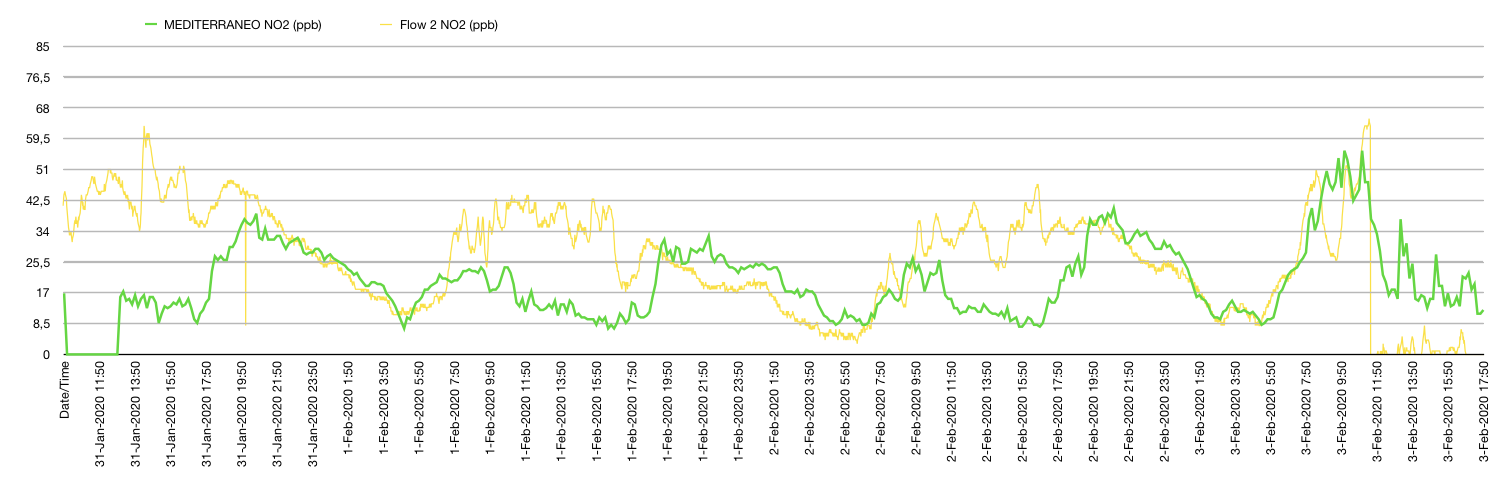
Let’s begin with the comparison of the NO2 gas sensor inside the Flow 2 and the reference monitor Teledyne Model 200E. The official measurements were in μg/m3 so I had to convert them into parts per billion (ppb). Converting the original values to ppb is not an easy task as you have to know the molecular weight of the pollutants (NO2=46.0055g/mol) and most importantly the temperature and atmospheric pressure at the time each value was taken, the problem was that they didn’t provide me with that data and I didn’t have them either. As a result, I looked them up and the average values were 15°C/59°F and 1019hPa, so to simplify my workflow I used those numbers in the formula for all the conversions. I know, I know, the data from the reference monitor are not 100% correct now but they are very close so they will do the trick.
Green: Teledyne Model 200E | Yellow: Flow 2
As you can see in the graph above there are quite many similarities in the trajectory of the lines. I was quite surprised and happy to be honest. You can clearly see how the low-cost sensor keeps getting exited from the pollutant(s) for a longer time but it was able to follow the official measurements. Keep that in mind, the official monitor Teledyne Model 200E worths around 8,000€ and Flow worths 159€.
Particulate Matter
Let’s continue our comparison with the Particulate Matter sensors from Atmotube Pro and Flow 2. Firstly, let’s see the PM10 measurements as the reference monitor Met One Instrument BAM 1020 (~18,000€) only provided the PM10 concentrations. The air inlet for the PM10 was about a meter away from where the 2 portable AQ monitors were placed and this is one of the reasons we can see that the concentrations from the BAM 1020 were much higher than the low-cost sensors.
Atmotube was able to follow the same trajectory as the BAM 1020 and when I multiply by x3.0 the output concentrations of the Atmotube the trend was much more similar (see graph below). On the other hand, Flow 2 was not able to keep up with the reference monitor. Flow’s (Yellow) line does not follow the reference monitor and I was unable to find any correlation.
Red: Atmotube Pro with amplified x3 PM10 output.
As the BAM PM2.5 measurements are being analysed in a lab right now in order to ensure accuracy by the state I will compare the result in a different post. They gave me an estimation of about a month.
Conclusion
It gives you a level of confidence to know that the little AQ monitor that you carry with you is able to reveal the truth about the air you breathe. Although the results are not perfect they can provide some general guidelines to the users.
Stay tuned for the final PM2.5 comparison, will Flow 2 have better PM2.5 measurements and will Atmotube Pro keep up?
One day is left before the planet Earth, where 7.8 Billion people live, completes its orbit around the Sun. During our journey around the Sun and inside the universe we witnessed some good and bad moments for our planet and us.
We saw some terrible disasters like the Amazon rainforest wildfires, Bushfires in Australia, fires all over the world, which were very hard to control because of the extreme weather and climate change that rewards and favors such as extreme phenomenal to happen.
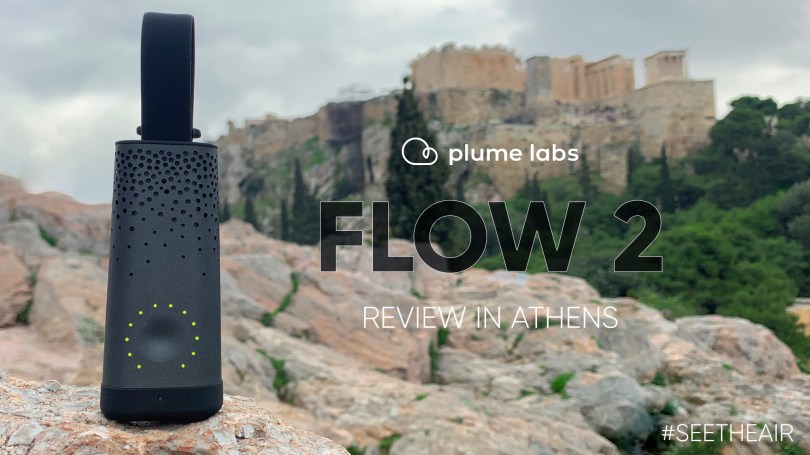
I was given the chance to review the brand new Flow 2 by Plume Labs and I took the opportunity to review it on my trip to Athens, Greece while visiting my family. Flow 2 is a small handheld AQ monitor that can follow you almost anywhere through the day and it tracks Particulate Matter, Nitrogen Dioxide and VOCs.
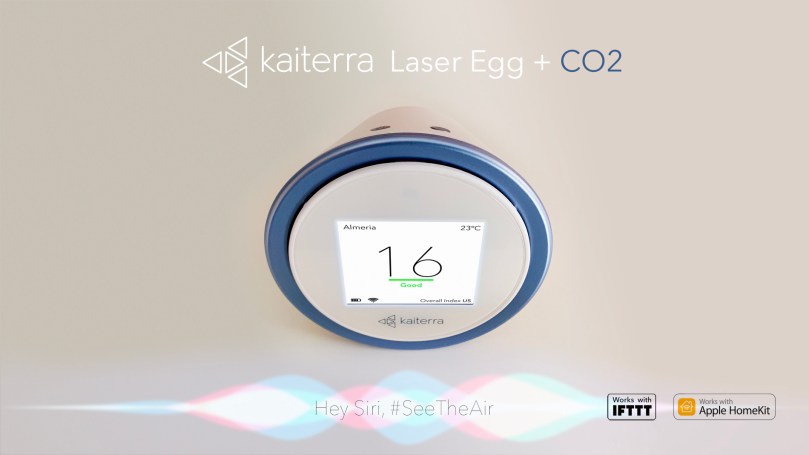
I was given the opportunity to review the brand new Laser Egg + CO2 monitor which is a new addition into the family of Kaiterra domestic air quality monitors.
This product is designed for those who work or stay lots of hours indoors and pay attention to how Carbon Dioxide CO2 can decrease our cognitive ability. The correlation between CO2 and productivity has been studied a lot for over 50 years by many academics.
Interesting facts, surprisingly, the design standard for CO2 levels in most buildings is 1000ppm but the recommended concentration is below 700ppm. In one of the studies, Harvard researchers have found significant negative impact at 930 ppm.
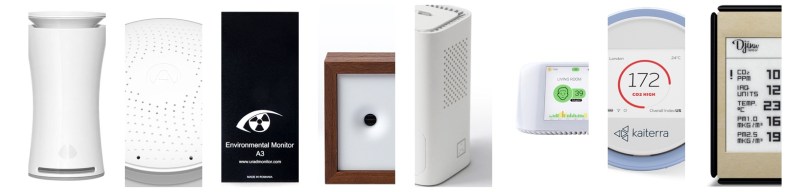
Here are all the available IAQ Monitors on the market 2019 Q4. There are so many devices out there but they all lack innovation and they all offer exactly the same technologies. Companies had better hear users feedback!
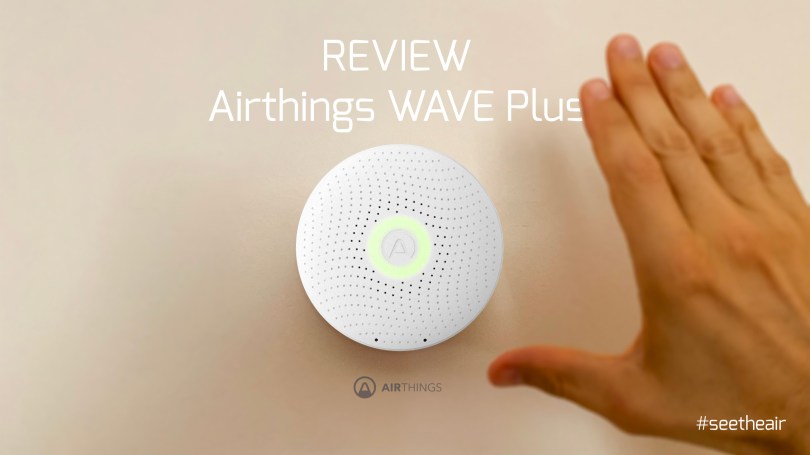
Finally,an air quality monitor that focuses on Radon indoor pollution. Many of you have asked meto review an AQM with a radon sensor and the most famous of all the Airthings Wave which comes in various versions (Wave, Wave Plus). In this review, I am featuring the Airthings Wave Plus.
What is Radon?
For those who hear for the first time about Radon, it comes from the radioactive breakdown aka decay of naturally occurring Uranium found in most soils. As a gas in the soil, it enters buildings through small openings in the foundation. Since radon can easily be trapped inside buildings, indoor radon concentrations can increase to many times that of outdoor levels. When radon gas decays, it emits radioactive radiation in the form of an alpha particle/waves and Airthings Wave can measure those alpha particles/waves. I don’t want to enter into details about the health effects on this post but Radon is found to be the second most common reason for lung cancer (after smoking).








 See The Air