DIY PM Monitor Take 2

Do you remember this DIY Low cost DIY PM Monitor, there is a new and better version available.

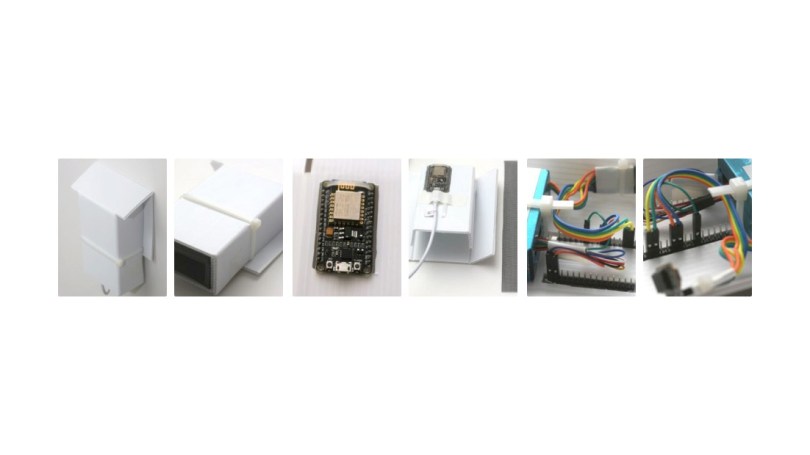
The new version offers a low cost housing and the software is more mature now. The software is open source, on github, and there are some pre-built images on their website.

A great new feature is the ability to store of a few days of data on the device which makes it more robust to internet outages and usable for periods away from wifi access, and it records every sample from the PMS5003 sensor which is more that one per second to better capture quick changes and better for mapping walking around.

You can find all the instructions on their website.

Why I am in favour of Air Quality Sensors

Why am I in favour of air quality sensors and I support all AQI monitors and sensors independently their price tag?

Because they help us literally See the Air. They are the only tools we can use to get hard evidence that air pollution exists and raise awareness. Someone could say that inaccurate and probably cheap sensors are useless and I will agree in some level but you have to keep in mind that not everyone can afford a +1000$ sensor. Those “cheap” sensors will allow people to discover what they breathe in some level, act on it and will make them more conscious about the pollution. I truly believe that sensors will shape future societies.

Sometimes when I talk to people about air pollution some of them don’t seem to understand that air pollution exists. They have never thought that the black smoke exiting a car is a harmful pollution. They have never thought that lighting the fireplace for a “cosy” moment has effects and consequences. They have never thought that air pollution is everywhere and can affect everyone.

When evidences are presented, people start to think and wonder. A fundamental action which distinguish humans from animals. At that moment people make a huge difference as human beings and the Oxygen that is consumed by them is not a waste. Education is the key to a better future.

uHoo vs AirVisual vs Awair

On this article I am going to compare three AQI monitors: AirVisual, uHoo and Awair.

All the monitors were placed together in the guest room in my house, as you can see on the picture above. I chose that room because I wanted to be able to isolate the devices from the rest of the house and from human interaction especially for the first 21 measurements. No one was allowed in that room during those measurements. After those 21 random measurements which were taken during 4 days period of time I opened the door and I created some “air pollution”. The whole experiment lasted 10 days. Below you can see the graphs with all the sensors and monitors.

Read More »

Curious Air Facts!

-How much air an average human breathe?

We breathe around 11,000 liters / 388 cubic feet of air in a day.

-How much oxygen an average human breathe?

We breathe 550 liters / 19 cubic feet of Oxygen per day.

-How much oxygen does a house plant produce?

A typical houseplant leaf produces about 5 ml of oxygen per hour (more when it is growing, less when carbon dioxide levels are higher, that is, the more oxygen you breathe in and carbon dioxide you breathe out, the less oxygen plants make, less at night).

-How much carbon dioxide is absorbed by trees?

A tree can absorb as much as 22Kg of carbon dioxide per year and can sequester 1 ton of carbon dioxide by the time it reaches 45 years old.

-What plants give off the most oxygen?

  1. Garden Mum
  2. Spider Plant
  3. Dracaena
  4. Ficus/Weeping Fig
  5. Peace Lily
  6. Boston Fern
  7. Snake Plant/Mother-in-Law’s Tongue

-Which trees absorb the most carbon dioxide?

  1. Pine (Ponderosa, red, white and Hispaniolan pines)
  2. Oake (Scarlet, Red and Virginia Live Oak)
  3. Douglas fir
  4. Bald Cypress
  5. Common Horse-chestnut
  6. Black Walnut
  7. London Plane

-How many plants should you have in your house?

The NASA studies on indoor pollution done in 1989 recommends 15 to 18 plants in 6 to 8-inch- diameter pots to clean the air in an average 1,800Ft²/167m². That’s roughly one plant per 100Ft²/9,2m² of floor space.

-How many plants are needed for a human to survive in an isolated room?

Scientists estimate a safe oxygen consumption of 50 liters per hour for a human. Meanwhile, a leaf gives off about 5 millilitres of oxygen per hour. A person would need to be in a room with about ten thousand leaves. About 300 to 500 plants would produce the right amount of oxygen, but it’s much harder to estimate the amount of carbon dioxide the plants absorb, especially if every time a person breathes out, they inhibit oxygen production. To be safe, don’t get into an airlock room without bringing about seven hundred potted plants with you.

“See The Air” & “Nicholas and his incredible eyesight” Books

“See The Air”

Years of experience and personal research made me write and design this straightforward guide-book about air pollution. All the crucial information are inside this book, see the air you breathe today. Available on Paperback and Digital.

“Nicholas and his incredible eyesight”

Nicholas is a Scottish boy who will help your kids understand better what Air Pollution is and what they need to do to combat it. Through his empowering story he will teach them how to be more sustainable and thoughtful with the environment. Available on Paperback, Digital and Limited Edition Hardcover.

“Nicholas – The Science Book”

Let’s make a journey around the world and learn everything about the air we breathe. We are going to learn about the Earth’s atmosphere, the composition of the air and the most common air pollutants. In addition, we will learn how air pollution negatively affects humans and the environment. Available on Paperback.

Nicholas and his incredible eyesight | Book

I am proud to announce my second book “Nicholas and his incredible eyesight” which is my second attempt to raise awareness on air pollution and this time by educating the youth.

The book is for all kids, the story is full of lovely and colourful drawings and at the end of the book the kids will have the opportunity to do some fun activities.

Synopsis of the story

Nicholas is a Scottish boy who lives in a small beautiful town in Scotland. He has to move with his family to London for a while. There and with the help of his teacher he will discover his unique super power.

The book is available on digital and paperback formats through the following stores:

Layer 3Layer 5Layer 4


If you are interested in a (Limited Edition) HardCover copy of my new book, please Contact me or Tweet me for more details.

ISBN-13: 9788469752708

Review: uHoo AQI Monitor

Finally is here. After having an adventure with the postal service for +40 days the uHoo device found its way to my home. I want to thank uHoo for its persistence.

Let me start by saying that this is a very promising device because it features 9 separate Sensors for Air Quality monitoring and there isn’t any other device with so many sensors for indoor use. The company was founded in August 2014 and it took them two and a half years to develop uHoo.

Features:

  • RGB LED Light
  • Temperature Sensor -40°C to 85°C / 40°F to 185°F
  • Humidity Sensor RT 0-100%
  • Air Pressure Sensor 300-1,100mbar
  • Carbon Dioxide CO2 Sensor 400-10,000ppm
  • Carbon Monoxide CO Sensor 0-1000ppm
  • VOC Sensor 0-1,000ppb
  • PM2.5 Sensor 0-200ug/m³
  • Ozone O3 Sensor 0-1,000ppb
  • *Nitrogen Dioxide NO2 Sensor 0-1000ppb
  • Micro USB Power Input 5V DC
  • WiFi 802.11 b/g/n @ 2.4 GHz

Read More »

Bedside Water Taste & Chemistry

Have you ever noticed that the water tastes different when you leave it in a glass on your nightstand overnight?

In general during the 8h sleep, CO2 is built inside the room. Especially in winter when we don’t ventilate as frequent and CO2 can reach levels higher than 2,000ppm inside the house. CO2 is a soluble gas and water is the perfect solvent. As a result a process called Acidification is occurred naturally and the PH lowers during that process. That gives your bedside glass of water a horrible taste.

Read More »

OK Lab Stuttgart – PM DIY Monitor

An Outdoor PM DIY Monitor

Do you think the current PM (Particulate Matter) monitors are too expansive or too risky to leave them outside? Do you need proofs for convincing your local authorities to take actions against air pollution?

Then it’s time to build your own personal outdoor PM DIY Monitor. It won’t cost you more than €32 and it can feed your community with valuable data about the air quality. Use that data to prove how bad is the air quality in your neighborhood or community.

Read More »

Three Great Books for the Summer

Summer is here and everyone is on vacation, with spare time to read some great books. It doesn’t matter which one you will choose Mine or Rieuwerts’ or Swyers’ or all of them, just make sure you learn more about the air you breathe. Share with your loved ones and friends the knowledge you will get.

Make sure you follow us on Twitter at @SeeTheAirBook@AnAirThatKills@TomSwyers.
SeeTheAirAnAirThatKillsbook tom