Global Coalition Launches Initiative to Establish Universal Indoor Air Quality Standards: Global Open Air Quality Standards (GO AQS)

A diverse global coalition of scientists, air quality experts, and industry leaders has united to establish the Global Open Air Quality Standards (GO AQS), an unprecedented initiative aimed at creating universal indoor air quality (IAQ) standards. This groundbreaking effort seeks to ensure that everyone, regardless of location or socio-economic status, has access to the knowledge and tools needed to enhance their health and well-being through improved air quality.

GO AQS will serve as an authoritative and comprehensive resource for scientists, engineers, public health officials, businesses, and policymakers worldwide. By providing accessible, consistent and clear, standardised guidelines for IAQ, it empowers people to make informed decisions about their living and working environments, directly impacting health and productivity.

IAQ significantly affects our health, cognitive function, and overall productivity. Poor indoor air can exacerbate respiratory conditions, increase the risk of cardiovascular problems, and contribute to reduced work performance. Establishing universal air quality standards is a critical step in ensuring equitable access to clean and healthy air globally.

The coalition comprises experts from different fields including public health, environmental science, epidemiology, occupational health, engineering, and air quality research. Together, they are dedicated to developing GO AQS standards that are both scientifically robust and practical for implementation across diverse settings. These standards will address a wide range of indoor pollutants, including particulate matter (PM and PCN), carbon dioxide (CO2), carbon monoxide (CO), ozone (O3), and formaldehyde (CH2O), which are known to have significant adverse effects on human health and environment.

GO AQS aims to be a valuable tool for the public, private sector, and academia alike. Organisations that adopt these standards can enhance the health and well-being of their employees and customers, while simultaneously reducing their environmental footprint. This initiative also supports broader sustainability goals by promoting healthier indoor environments. 

While air quality interrogators and manufacturers are supportive of the overall goals of GO AQS, there are areas where the draft version requires further refinement to ensure its practical implementation. We remain committed to working collaboratively with all stakeholders to finalise a version of GO AQS that is both effective and feasible for the industry. Therefore the coalition is currently finalising the GO AQS standards and developing educational materials to facilitate their global implementation. The official launch is anticipated in December 2024, marking a significant milestone in the global effort to prioritise IAQ.

Read More »

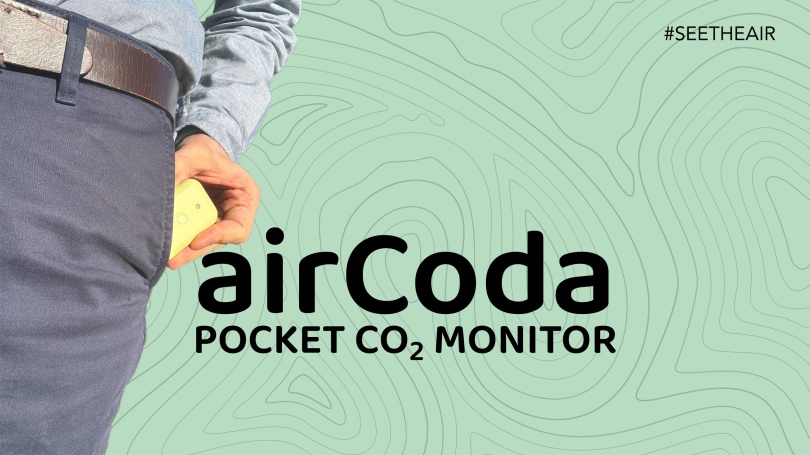
Review: airCoda – Pocket CO2 Monitor

Looking for a way to monitor CO2 levels on the go? The airCoda pocket CO2 monitor might be your breath of fresh air. This compact device features a photoacoustic NDIR CO2 sensors, a technology known for its small size and accuracy in measuring CO2 concentrations in any environment.

Why the airCoda?

  • Pocket-Sized Portability: Unlike bulkier CO2 monitors, airCoda’s small size allows you to easily carry it anywhere. Whether you’re checking CO2 levels in your office, classroom, or even your car, airCoda gives you the freedom to monitor air quality wherever you go.
  • Sensor Accuracy: Thanks to the integrated sensor, you can trust airCoda to provide reliable CO2 readings. This is crucial for making informed decisions about ventilation and maintaining healthy air quality.
Read More »

Elevating the Topic of Healthy Air | The Air Exchange S2 E1

H&V’s Air Exchange host, Bruce Lorange, kicks off Season 2 by sitting down with IAQ “Influencer”, Sotirios Papathanasiou of the weblog @ Seetheair.org to discuss the importance of healthy air.

Sotirios discusses the importance of air quality, clean air initiatives, and healthy buildings as he shares his background and passion for merging technology and the environment. Sotirios and Bruce also discuss the need for education and legislation to improve indoor air quality.

Read More »

Beyond the Pleasant Smell: The Hidden Dangers of Air Fresheners in Your Home

We all like our homes to smell fresh (not possible) and inviting. But that seemingly harmless air freshener, scented candle, or electric perfume dispenser might be doing more harm than good. In fact they do and you will understand in detail below. These common household items can release a surprising number of chemicals that negatively impact indoor air quality and potentially our health.

The Culprit: Volatile Organic Compounds (VOCs)

All air fresheners, regardless of form (spray, plug-in, candle), rely on volatile organic compounds (VOCs) to create their signature scents. VOCs are chemicals that easily become gases at room temperature. While some VOCs occur naturally, those found in air fresheners are often synthetic and can irritate the eyes, nose, and throat.

Read More »

From Boom to Bust: The Great IoT Air Quality Recession

The once booming Internet of Things (IoT) air quality monitoring market is facing a harsh reality check. Fueled by a surge in AI startups attracting investments and a subsequent saturation of low-cost air quality monitors, the industry is experiencing a period of upheaval. This downturn, dubbed “The Great IoT Air Quality Recession,” is forcing companies to adapt or face extinction. I see many high-profile executives leaving previously thought innovative startups in the realm of air quality in search of a more “stable” future.

A Wave of Investment and Sensor Saturation

AI startups like ChatGTP and similar, promising to leverage the power of machine learning to generate content or analyze data, became investor darlings. This new influx of cash is fueling the decline of IoT low-cost air quality solutions.

After the COVID-19 pandemic, the market quickly became saturated with low-cost monitors that promised that will fix indoor and outdoor environments. Buildings were filled with cheap monitors, but actionable insights remained scarce. The promised AI-powered analysis, in many cases, failed to materialize. Consumers were left with a plethora of data points with no clear understanding of what it all meant or what to do.

Read More »

Review: AIRVALENT – The smallest CO2 Monitor

Since I caught COVID last month (for the first time after 4 years), I’ve become increasingly concerned about the air quality in the places that I visit or stay for a long period of time like an airplane. So, I decided to try out the AIRVALENT CO2 air quality monitor to see if it could help me identify badly ventilated indoor environments.

Why the AIRVALENT?

  • Smallest CO2 monitor available: If size is a major concern, the AirValent could be a good option as it can easily fit in your pocket while traveling.
  • Aesthetically pleasing design: The AirValent appears to have a sleek and modern design that can be customizable during the purchase process. Various colors and patterns to choose from.
  • Tracks CO2, humidity, and temperature: This allows for a more comprehensive understanding of your indoor environmental quality.
  • Bluetooth connectivity: Allows for data monitoring and analysis through a smartphone app.

Technical Characteristics of AIRVALENT

Read More »

Cozy Fireplaces, Clouded Lungs: Why Wood Burning Stoves are a Holiday Health Hazard

The holidays conjure up images of crackling fires, warm hearths, and cozy evenings. But for many, especially those living in communities with widespread wood burning, this idyllic picture masks a grim reality: a significant decline in indoor and outdoor air quality. Wood burning stoves, while charming and nostalgic, are a major contributor to indoor and outdoor air pollution, posing serious health risks to both the occupants of the house and the surrounding community.

Indoor Air: A Smoky Trap

Burning wood releases a cocktail of harmful pollutants, including fine particulate matter (PM2.5), carbon monoxide, nitrogen oxides, and volatile organic compounds (VOCs). These microscopic particles can easily infiltrate the lungs and bloodstream, causing a range of health problems:

Read More »

Holiday Cheer, Hazy Air: How Festive Practices Can Harm Indoor Air Quality

The holidays are a time for celebration, filled with the warmth of family gatherings, delicious meals, and festive decorations. However, amidst the joy, some seemingly harmless traditions can have unintended consequences for our indoor air quality.

1. Culinary Combustion: The Peril of Holiday Feasts

Holiday dinners often involve hours spent in the kitchen, with ovens cranking and stoves blazing, filling the air with a medley of aromas. While tempting, this culinary combustion releases volatile organic compounds (VOCs) from cooking oils, burning meat, and even vegetables. VOCs can irritate eyes and lungs, exacerbate respiratory issues, and contribute to poor air quality. Keep ventilation on!

2. Fragrant Fumes: The Unseen Threat of Candles and Incense

Candles and incense are staples of holiday decor, adding warmth and ambience to our homes. Unfortunately, their burning releases pollutants like particulate matter and volatile organic compounds, impacting air quality. For those with asthma or allergies, these irritants can trigger unpleasant reactions. Say no to candles and incense burning!

Read More »

BS 40102 – A Two Part Standard on Health, Wellbeing, Thermal Comfort, and Indoor Air Quality

The BS 40102, a fresh standard introduced in 2022 (draft released) by the British Standards Institute, focuses on assessing the health, wellbeing, and indoor environmental quality (IEQ) of buildings. It incorporates an updated best-practice method for addressing thermal comfort, indoor air quality, and overheating in buildings.

Regarding the new exposure limits, they are derived from various sources, including the DEFRA Daily Air Quality Index, WHO Air Quality Guidelines 2021, BREEAM and WELL Guidelines, and British Standard BS EN 16798-1.

Part 1 – Health and Wellbeing in Buildings

  • BS 40102-1 gives recommendations for the measuring, monitoring and reporting of the well-being and IEQ performance of an occupied building and the associated building services.
  • BS 40102-1 provides an evaluation and rating system (IEQ performance score), the aim of which is to enhance IEQ, to create healthier buildings and improve the well-being of building occupants; including but not limited to staff, visitors, tenants and customers. 
Read More »

Understanding ASHRAE Standard 241: A Boon for Building Occupants

Understanding ASHRAE Standard 241: Control of Infectious Aerosols

ASHRAE, the American Society of Heating, Refrigerating and Air-Conditioning Engineers, is a global professional organization committed to advancing the arts and sciences of heating, ventilation, air conditioning, refrigeration and their allied fields. They have recently introduced a new standard, ASHRAE 241-2023, which focuses on the ‘Control of Infectious Aerosols.’ This new standard is a significant step forward in addressing the transmission of airborne diseases in non-healthcare settings.

The Genesis of ASHRAE 241

The genesis of ASHRAE 241 was during the COVID-19 pandemic, where there was a widespread realization that ventilation rates in non-healthcare settings were not designed to mitigate airborne disease transmission. The pandemic highlighted the inadequacies of our buildings’ ventilation systems, and organizations scrambled to upgrade their systems without a clear understanding of ‘how much’ ventilation was needed.

Read More »